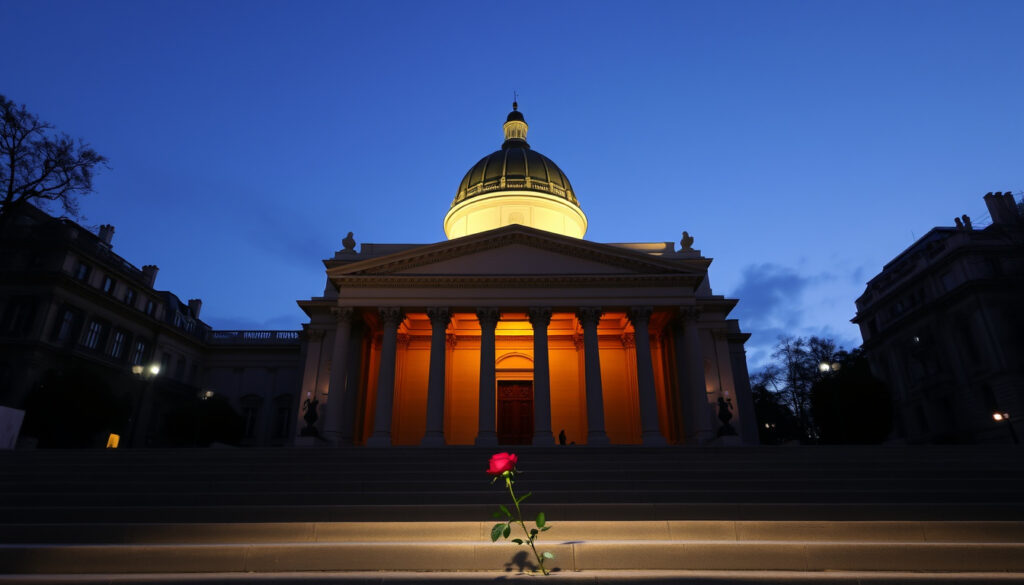
Josephine Baker: Dancer, Spy, Activist, Panthéon Inductee
Few entertainers have lived a life as extraordinary as Josephine Baker’s. From a poor childhood in St. Louis, Missouri, she rose to become a global star in Paris, a spy for the French Resistance, and a tireless civil rights activist. This article explores the many facets of her remarkable journey — from the banana dance to the Rainbow Tribe, and her induction into the Panthéon in 2021.
Born: June 3, 1906, St. Louis, Missouri, USA ·
Died: April 12, 1975, Paris, France ·
Occupation: Dancer, singer, actress, French Resistance spy, civil rights activist ·
Adoptive children: 12 (Rainbow Tribe) ·
Notable award: Croix de Guerre, Legion of Honour (France)
Quick snapshot
- Baker was a dancer, singer, actress, and spy. (The Conversation (academic analysis))
- She adopted 12 children. (Wikipedia)
- She received the Croix de Guerre. (The Vintage News)
- She spoke at the March on Washington in 1963. (CIA)
- The exact number of her marriages is disputed; sources vary on an unnamed second husband.
- Her net worth at the time of her death is not definitively documented.
- 1906: Born in St. Louis, Missouri. (Wikipedia)
- 1920s: Moves to Paris, becomes star at Folies Bergère. (CIA)
- 1939-1945: Works as a spy for French Resistance. (The Vintage News)
- 2021: Inducted into the Panthéon — first Black woman honored. (The Conversation (academic analysis))
- Baker’s legacy continues to inspire new generations of activists and artists.
- Her Rainbow Tribe story is increasingly studied as a pioneering social experiment.
Eight key facts about Josephine Baker, from her birth name to her children:
| Label | Value |
|---|---|
| Full Name | Freda Josephine McDonald |
| Stage Name | Josephine Baker |
| Born | June 3, 1906, St. Louis, Missouri |
| Died | April 12, 1975, Paris, France |
| Cause of Death | Cerebral hemorrhage |
| Notable Awards | Croix de Guerre, Legion of Honour |
| Spouses | Willie Wells (1919–1920), Jean Lion (1937–1938), an unnamed second husband, Jo Bouillon (1947–1961) |
| Children | 12 adopted (Rainbow Tribe) |
What Was Josephine Baker Most Known For?
Entertainment career in Paris
- Baker became a star at the Folies Bergère, where she performed her iconic banana dance. (Wikipedia)
- She was a singer and actress in films, known for her charismatic stage presence.
Baker’s Parisian fame gave her a platform that she later used for espionage and activism — a rare blend of celebrity and resistance.
Role in the French Resistance
- During World War II, Baker volunteered for the Red Cross and the French Resistance. (The Vintage News)
- She smuggled messages to the Deuxième Bureau, often writing in invisible ink on sheet music. (French Ministry of Armed Forces)
The implication: Her celebrity status was a perfect cover, allowing her to move freely among high-ranking Nazi officials and gather intelligence that saved lives.
Civil rights activism
- Baker refused to perform for segregated audiences in the United States. (National Library of Israel blog)
- She spoke at the 1963 March on Washington alongside Martin Luther King Jr. (CIA)
The implication: Baker’s ability to leverage her fame across these three domains set a precedent for celebrity activism that remains influential today.
Why Did Josephine Baker Get Married at 13?
Her early life in St. Louis
- Freda Josephine McDonald was born on June 3, 1906, in St. Louis, Missouri. (Wikipedia)
- She grew up in poverty and experienced racial discrimination.
The circumstances of her first marriage
- In 1919, at age 13, she married Willie Wells. (Wikipedia)
- The marriage was likely an attempt to escape an abusive home and poverty.
- The marriage ended within a year.
The pattern: Early hardship shaped her determination to leave the United States and build a new life in France, where she found freedom from the racial barriers of her homeland.
Did Josephine Baker Have 12 Children?
Her Rainbow Tribe
- Baker adopted 12 children from different ethnic and national backgrounds, starting in 1953. (Slate (cultural commentary))
- She called them her Rainbow Tribe. (National Library of Israel blog)
Motives behind the adoptions
- The adoptions were a deliberate statement against racism and for global harmony. (The Conversation (academic analysis))
- Baker and her husband Jo Bouillon raised the children at a 15th-century chateau in southern France, Les Milandes. (Harvard University Press)
The Rainbow Tribe was a costly experiment that contributed to Baker’s financial troubles later in life, but it also solidified her legacy as a pioneer of multi-ethnic family building.
The catch: The financial burden of the Rainbow Tribe forced Baker to commercialize her home, yet the project remains a powerful symbol of her commitment to anti-racism.
What Happened to Josephine Baker?
Her later career and financial troubles
- Baker’s lavish lifestyle and the expenses of maintaining the Rainbow Tribe led to financial difficulties. (Harvard University Press)
- She transformed Les Milandes into a themed attraction with rides, hotels, and a collective farm to raise money.
Her final performance and death
- On April 12, 1975, Baker died of a cerebral hemorrhage in Paris. (Wikipedia)
- She received a full military funeral in France, a rare honor for a civilian.
Her legacy and honors
- In 2021, she was inducted into the Panthéon in Paris, the first Black woman to receive the honor. (French Ministry of Armed Forces)
Why this matters: Baker’s induction into the Panthéon symbolizes France’s recognition of her contributions to the Resistance and to racial equality, cementing her status as a national hero.
What Was Josephine Baker’s Famous Quote?
Her most well-known sayings
- Baker is remembered for many quotes about life, love, and equality. One of the most famous: “I have two loves: my country and Paris.”
- Another: “The most important thing is to be yourself.”
Quotations from her biography ‘Fearless and Free’
Baker’s writings often reflected her philosophy of living without fear and embracing diversity. Her words continue to inspire activists today.
Baker’s quotes are frequently cited in modern discussions of identity and belonging, yet they risk being stripped of the political context that gave them power.
The implication: Readers should approach Baker’s quotes with an understanding of the historical struggles that shaped them.
Was Josephine Baker a Millionaire?
Her peak earnings
- At the height of her career in the 1920s and 1930s, Baker was one of the highest-paid entertainers in Europe. (CIA)
Financial decline
- She lived lavishly, spending on homes, cars, and the Rainbow Tribe.
- By the 1960s, she faced serious money problems, and her net worth at death is unclear — but she was not a millionaire at that time.
The catch: Baker’s financial story mirrors the classic arc of many entertainers who earn huge sums but lose it through mismanagement and generosity.
What Did Ernest Hemingway Say About Josephine Baker?
Hemingway’s admiration for Baker
- Ernest Hemingway called Baker “the most sensational woman anyone ever saw.”
- He wrote about her in his Parisian circle, reflecting her impact on 1920s Paris.
The cultural context of their meeting
Hemingway and Baker moved in the same expatriate social scene in Paris. His quote captures how she captivated the literary and artistic elite of the era.
The implication: The admiration of a literary giant like Hemingway underscores Baker’s cultural transcendence beyond mere entertainment.
Timeline
- 1906 – Born Freda Josephine McDonald in St. Louis, Missouri. (Wikipedia)
- 1919 – Married Willie Wells at age 13. (Wikipedia)
- 1920s – Moved to Paris and became a star at the Folies Bergère. (CIA)
- 1939–1945 – Worked as a spy for the French Resistance during World War II. (The Vintage News)
- 1947 – Married Jo Bouillon; began adopting children from around the world. (Harvard University Press)
- 1963 – Spoke at the March on Washington alongside Martin Luther King Jr. (CIA)
- 1975 – Died in Paris; received a full military funeral. (Wikipedia)
- 2021 – Inducted into the Panthéon in Paris, the first Black woman to receive the honor. (The Conversation (academic analysis))
The timeline reveals how Baker’s personal milestones were interwoven with historical events, from the Jazz Age to the Cold War era.
Clarity Check
Confirmed facts
- Baker was a dancer, singer, actress, and spy. (The Conversation (academic analysis))
- She adopted 12 children. (Wikipedia)
- She received the Croix de Guerre. (The Vintage News)
- She died on April 12, 1975 from a cerebral hemorrhage. (Wikipedia)
- She spoke at the March on Washington. (CIA)
What’s unclear
- The exact number of her marriages is disputed; sources vary on her second marriage.
- Her net worth at the time of her death is not definitively documented.
The clarity check underscores that while many core facts are well-documented, some details—particularly around her personal finances and marital history—remain ambiguous.
Quotes
“She is the most sensational woman anyone ever saw.”
– Ernest Hemingway, on Josephine Baker’s impact in 1920s Paris
“I have two loves: my country and Paris.”
– Josephine Baker, expressing her dual allegiance
“The most important thing is to be yourself.”
– Josephine Baker, from her philosophy of life
Josephine Baker’s life demonstrated the power of reinvention. From a poverty-stricken childhood to the heights of Parisian fame, from clandestine spy work to a public stand against racism, she refused to be defined by any single label. For the modern activist, the lesson is clear: use your platform, whatever it may be, to challenge injustice — or risk being forgotten as just another entertainer.
facebook.com, madrascourier.com, findingtimetowrite.wordpress.com, spiegel.de, hotelerecenzje.pl
For a deeper look into her multifaceted legacy, explore Josephine Bakers remarkable life as both entertainer and resistance figure.
Frequently asked questions
What was Josephine Baker’s banana dance?
Baker’s banana dance was a iconic performance at the Folies Bergère where she wore a skirt made of bananas and moved with wild, comedic energy. It became a symbol of 1920s Parisian nightlife. (Wikipedia)
How did Josephine Baker spy for France?
Baker used her celebrity status to attend parties and mix with high-ranking officials, gathering intelligence. She carried messages written in invisible ink on sheet music. (French Ministry of Armed Forces)
Why did Josephine Baker move to France?
She moved to escape the racial segregation and discrimination of the United States, finding a more accepting environment in Paris where she could perform freely. (National Library of Israel blog)
What is the Rainbow Tribe?
The Rainbow Tribe was Baker’s adopted family of 12 children from different ethnic and national backgrounds, which she created as a statement against racism and for universal brotherhood. (The Conversation (academic analysis))
What awards did Josephine Baker receive?
She received the Croix de Guerre, the Medal of the Resistance with Rosette, and was named a Chevalier of the Legion of Honour. (The Vintage News)
Where is Josephine Baker buried?
She is buried in the Cimetière de Monaco in Monaco. However, her heart is interred in the Panthéon in Paris, a rare honor. (Wikipedia)
Did Josephine Baker have any biological children?
There is no confirmed record of biological children. She adopted 12 children and considered them her own. (Wikipedia)
More related posts
 Michael McIntyre’s The Wheel: Not Cancelled, Just on Hiatus
 TV Wall Bracket Guide: Types, VESA & Buying in Ireland
 Woody Guthrie Biography, Illness, and Bob Dylan Link
 Jimmy Uso: Biography, Family, Arrest, and Betrayal Explained
 What is Sky Signature? Ireland TV Package Explained
 Alexia Putellas: Biography, Stats, Achievements, and News (2026)
 How Do Antibiotics Work – Targeting Bacterial Cell Walls