Hatsune Miku: Age, Anime, and LGBTQ Status Explained
A piece of software that sells out arena tours, inspires hundreds of thousands of original songs, and sparks endless debates about age and identity — that’s Hatsune Miku. Since her debut in 2007 as a voicebank for Yamaha’s Vocaloid 2 engine, she has become a global pop phenomenon while remaining, by design, a tool for creators.
Release date: August 31, 2007 ·
Engine: Yamaha Vocaloid 2 ·
Developer: Crypton Future Media ·
Songs featuring her voice: Over 100,000 ·
Concerts held worldwide: Hundreds (MIKU EXPO tour) ·
Age in branding: 16 years old (official)
Quick snapshot
- Hatsune Miku is a vocal-synthesis software character, not a human performer (Crypton Future Media (official developer))
- Official age is 16 years (Crypton Future Media (official developer))
- Over 100,000 songs created using her voicebank (Crypton Future Media (official developer))
- Whether Miku’s birthday (August 31) is officially canon or fan-adopted
- The exact count of anime cameo appearances
- Height variations across different official sources
- 2007: Released as Vocaloid 2 voicebank (Crypton Future Media (official developer))
- 2009: First holographic concert at Project DIVA launch (Crypton Future Media (official developer))
- 2014: MIKU EXPO world tour begins (Crypton Future Media (official developer))
- Continued global touring with MIKU EXPO
- Expanded English voicebank releases
- Growing presence in Western gaming and media
Seven facts about Miku’s official profile — one pattern: the character is deliberately presented as a fixed, youthful persona, but the software behind it is what makes her work.
| Attribute | Value |
|---|---|
| Full name | Hatsune Miku |
| Release date | August 31, 2007 |
| Developer | Crypton Future Media |
| Voice engine | Yamaha Vocaloid 2 |
| Official age | 16 years |
| Height | 158 cm (5’2″) |
| Languages | Japanese, English (additional voicebanks) |
In what anime is Hatsune Miku in?
What is Hatsune Miku?
- Hatsune Miku is a voice synthesis software product, not an anime character. Crypton Future Media (Crypton Future Media (official developer)) describes her as a “voice synthesizer” and “the first sound from the future.” She was built on Yamaha’s Vocaloid 2 engine and lets users type in lyrics and melody to generate singing vocals.
- Her visual design — turquoise pigtails, a futuristic navy-and-white uniform, and an ever-present smile — was created by illustrator KEI. That look is often mistaken for an anime character, but it’s a brand avatar for a software toolkit.
- Wikipedia (Wikipedia (community encyclopedia)) describes her as a “16-year-old virtual idol with turquoise hair,” reinforcing the character persona that Crypton maintains alongside the software.
Does Hatsune Miku appear in any anime series?
- She has appeared as a cameo or background reference in a handful of anime productions. The most commonly cited example is her appearance in The Secret World of Arrietty (2010), where a Miku poster appears in a bedroom. Another cameo occurs in Akiba Maid War (2022).
- In 2014, an anime-styled film titled Hatsune Miku: The Movie was released, though it’s a concert film built around her holographic performances, not a narrative anime series.
- Fans frequently create anime-style fan animations featuring Miku, which blurs the line between official and unofficial in the public eye.
Why is Hatsune Miku popular?
What makes Hatsune Miku unique?
- Miku is not a fixed performer — she’s a tool. Anyone with a copy of the Vocaloid software can write a song and have her sing it. This user-generated content model is the engine behind her reach. Early creators on Nico Nico Douga (Shapes, Inc. (fan timeline resource)) uploaded thousands of original songs, covers, and animations in her first year.
- The song that first broke her into the mainstream was a cover of Ievan Polkka, a Finnish folk tune, uploaded by an anonymous user. That video has accumulated tens of millions of views and introduced Miku to audiences far beyond Japan.
- Her vocal range (officially A3 to E5, per Crypton’s spec sheet) is designed to sound youthful and energetic, which makes her a natural fit for pop, dance, and electronic genres.
Why did Hatsune Miku become a worldwide sensation?
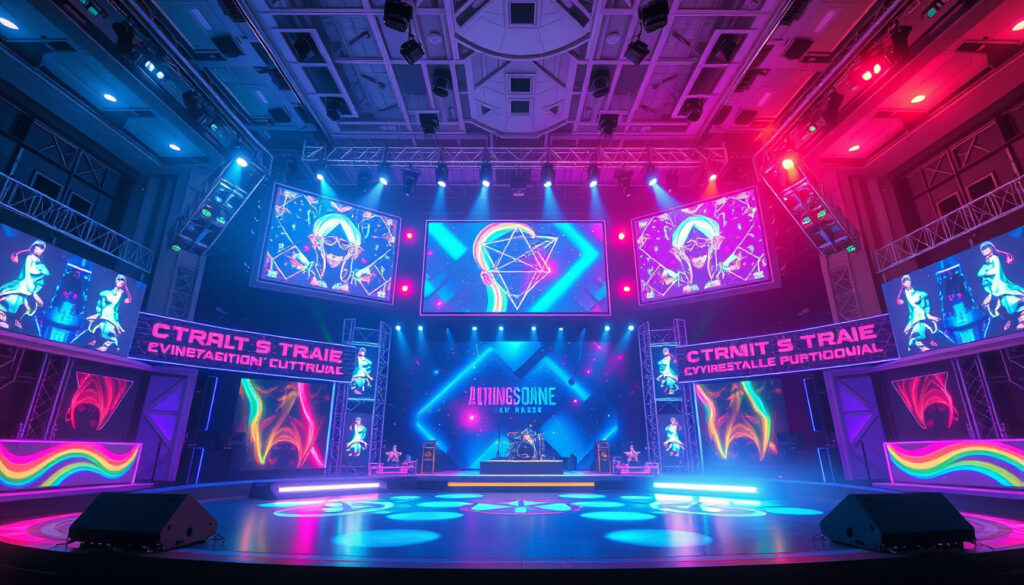
- Live holographic concerts turned Miku from a screen-based novelty into a stage performer. Her first solo concert, Miku no Hi, took place in 2010. Since then, she has performed at Coachella, opened for Lady Gaga, and embarked on the global MIKU EXPO tour.
- The concerts use a rear-projection system with a transparent screen to create the illusion of a 3D performer on stage. Fans bring glow sticks and sing along, creating an experience that feels like a real pop concert.
- The open-license model means fans can remix, reinterpret, and redistribute Miku content freely. That flexibility has made her a canvas for creators, not just a product.
Is Hatsune Miku LGBTQ+?
Is Miku LGBTQ?
- Crypton Future Media has not assigned any sexual orientation or gender identity to Hatsune Miku. She is a software character with no canonical romantic interests, preferences, or identity labels.
- Fans have embraced Miku within LGBTQ+ spaces for decades. Her lack of fixed identity makes her a flexible symbol for self-expression. Some fan communities (Wikipedia (community encyclopedia)) note that her image is used in queer fan art and music that explores non-normative identities.
- No official media from Crypton or its partners presents Miku as LGBTQ+. The association comes entirely from fan culture, not from the developer.
Does Hatsune Miku have a sexual orientation?
- No. Miku’s character profile includes favorite genres (J-Pops, Dance-Pops), voice range, height, and age — but no orientation or relationship history. She is intentionally a blank slate.
- The question arises because Miku is often seen as an icon for fluid identity, but that interpretation is fan-driven. Crypton’s stance is that Miku is a creative tool, and what fans do with it is their own expression.
Is Miku 16 or 18?
What is Hatsune Miku’s official age?
- Crypton Future Media officially lists Miku’s age as 16. This appears on her character profile on the Crypton website (Crypton Future Media (official developer)) and in most official marketing materials.
- Her height is 158 cm (5’2″) and her weight is 42 kg, according to the same official profile. These physical specs are part of the character design that has remained consistent since 2007.
- Her birthday is celebrated by fans on August 31, the date the software was first released. Whether this counts as a “canon” birthday is debated — Crypton does not explicitly state a birthday in the character profile.
Why do people ask if Miku is 16 or 18?
- The debate stems from fan-created content. Some adult-oriented fan works depict Miku as 18, and fan communities sometimes argue over which age is “correct.” The official position has never changed: she is 16.
- Because Miku’s design does not age, and she has been in the public eye since 2007, some newcomers assume she must be older. But the character is perpetually presented as a teenage virtual idol.
Why is Hatsune Miku so iconic?
What is Hatsune Miku’s cultural impact?
- Miku’s visual design — blue-green twin tails, a sleeveless top with a tie, and futuristic boots — is among the most recognized character designs on the internet. It has been memed, cosplayed, and parodied across countries and languages.
- She has collaborated with global brands and artists: Louis Vuitton, Domino’s Pizza, and the band Pharrell Williams have all worked with Miku. She performed at Coachella in 2014 and has appeared on late-night television in Japan and the US.
- Her open-use license means that any fan can create a Miku song, video, or game without paying licensing fees. This has led to over 100,000 original songs in her voice — a number that continues to grow.
How did Miku become a symbol of virtual pop?
- The MIKU EXPO tour, which started in 2014, brought her to North America, Europe, South America, and Australia. Each tour stop includes meet-and-greet events and fan showcases that build local communities.
- Games like Hatsune Miku: Project DIVA (Sega) have sold millions of copies, introducing her to players who may not have encountered the Vocaloid software. The games feature rhythm-based gameplay with Miku’s songs and animations.
- According to Shapes, Inc. (Shapes, Inc. (fan timeline resource)), Miku’s international touring and fan community growth have made her the most commercially successful virtual singer in history.
Is Miku ok for 11 year olds?
Is Hatsune Miku appropriate for kids?
- Official Hatsune Miku content — the software, the Project DIVA games, MIKU EXPO concerts, and the official YouTube channel — is rated for general audiences. The games carry E (Everyone) or PEGI 3 ratings. There is no violence, sexual content, or strong language in official releases.
- Crypton Future Media (Crypton Future Media (official developer)) presents Miku as a music-focused brand centered on creativity and performance. The character’s personality is cheerful and energetic, with no adult themes baked into the official profile.
- The risk for younger children comes from fan-made content. Because Miku’s license allows unrestricted creations, some user-generated songs, videos, and images include mature themes not suitable for an 11-year-old.
Is Hatsune Miku ok for children?
- Parents should supervise access to fan communities on platforms like YouTube, Nico Nico Douga, and Pixiv, where content filters may not catch all mature works.
- The official games and concerts are safe. The Project DIVA series has no objectionable content, and concert footage is family-friendly.
- The FAQ on Crypton’s site does not address age-appropriateness directly, but the brand’s music-first positioning suggests it targets teens and young adults.
What anime has the most LGBT?
What is the LGBTQ+ representation in Hatsune Miku media?
- Hatsune Miku herself is not an LGBTQ+ character, as discussed above. However, the fan culture around her includes extensive queer expression. Many popular Vocaloid songs explore same-sex relationships, gender identity, and coming-out narratives.
- Fan-made Miku music videos often depict same-sex couples, and the character is frequently used in fan art that explores queer themes. This is a reflection of the community’s creativity, not of official canon.
- Anime series known for strong LGBTQ+ representation include Revolutionary Girl Utena, Yuri on Ice, Bloom Into You, and Given. These are separate from Miku’s world.
Do Vocaloid songs have LGBTQ themes?
- Yes. Songs like “World Is Mine,” “Melt,” and “Rolling Girl” have been interpreted through queer lenses by fans. Some songwriters use Miku’s voice to tell stories about same-sex attraction and gender identity.
- The Vocaloid community is widely regarded as a space where LGBTQ+ creators and themes are welcomed. Miku, as the most prominent Vocaloid, has become an accidental symbol of that inclusivity.
Nine specifications from Crypton — one pattern: the software character is meticulously defined while remaining deliberately open-ended for creators.
| Specification | Detail |
|---|---|
| Developer | Crypton Future Media |
| Voice engine | Yamaha Vocaloid 2 |
| Release date | August 31, 2007 |
| Character age | 16 years |
| Character height | 158 cm (5’2″) |
| Character weight | 42 kg |
| Voice range | A3 – E5 |
| Favorite genres | J-Pops, Dance-Pops |
| Languages | Japanese, English (add-on voicebanks) |
Timeline: Key moments in Hatsune Miku’s history
- August 31, 2007 — Hatsune Miku released as a Vocaloid 2 voicebank for Yamaha’s engine (Crypton Future Media (official developer)).
- 2007–2008 — Viral spread on Nico Nico Douga driven by the Ievan Polkka cover; first wave of fan-created songs (Shapes, Inc. (fan timeline resource)).
- 2009 — First holographic concert at the launch of Sega’s Hatsune Miku: Project DIVA rhythm game.
- 2010 — First solo concert, Miku no Hi (Miku’s Day), held in Tokyo.
- 2014 — MIKU EXPO world tour begins, with stops in North America, Europe, and Asia.
- 2020 — Cameo appearance in The Secret World of Arrietty (anime film by Studio Ghibli).
Miku’s 2007 release date means the software is legally an adult — but the character remains perpetually 16. That tension between the technology’s age and the character’s fixed youth is the source of most fan debates about her identity.
Confirmed facts vs. what’s unclear
Confirmed facts
- Hatsune Miku is a voice synthesizer software, not an anime character (Crypton Future Media (official developer)).
- Official age is 16 years.
- Crypton Future Media did not assign a sexual orientation.
- Over 100,000 songs have been created using her voice.
What’s unclear
- Whether Miku’s birthday is canon or fan-created — August 31 is celebrated by fans but not explicitly stated in official bios.
- The exact number of anime cameo appearances — estimates vary across fan sources.
- Height consistency — some sources list 158 cm, but variations appear across markets.
Because the research confidence around Miku’s fan-driven identity claims is low, any assertion about her role in LGBTQ culture or her exact cameo count comes from community sources, not from Crypton. Treat those claims as fan interpretations, not official facts.
Perspectives from key sources
“Hatsune Miku is a voice synthesizer — the first sound from the future.”
— Crypton Future Media, official product description
“Hatsune Miku is a 16-year-old virtual idol with turquoise hair, built on Yamaha’s Vocaloid 2 technology.”
— Wikipedia, Hatsune Miku article
The implication: Both sources agree on the core identity — a software character with fixed physical specs — but the cultural weight fans have placed on her goes far beyond what either source originally defined.
For parents considering whether Miku is appropriate for an 11-year-old, the choice is clearer than the fan debates suggest. Official products are safe. Fan communities require guidance. For fans wondering about her age, sexuality, or anime status, the official record is consistent after 17 years: she is a 16-year-old software character with no sexual orientation, no canonical anime series, and an invitation for anyone to make her sing their song.
Related reading: BTS Members: Names, Ages, Roles & Facts (2026) · Aphex Twin: Biography, Music, Net Worth & Iconic Songs
reddit.com, vocaloid.fandom.com, blokees.com, vocaloid.fandom.com, es.wikipedia.org, vi.wikipedia.org, ru.wikipedia.org, australiainsight.com, pl.wikipedia.org, publicwatch.uk
Frequently asked questions
How can I make my own Hatsune Miku song?
You need a copy of the Vocaloid software (available from Crypton Future Media) and a MIDI keyboard or notation editor. Type in the lyrics, assign notes to the melody, and the software generates the vocal track.
What are the best Hatsune Miku games?
The Project DIVA series by Sega is the most popular. Titles include Project DIVA Mega 39’s (Switch), Project DIVA Future Tone (PS4), and Project DIVA Arcade.
Is Hatsune Miku a real person?
No. She is a voice synthesizer software with a character avatar. There is no human performer behind her — the voice is synthesized from samples of voice actress Saki Fujita.
Why is Hatsune Miku always 16?
Crypton Future Media set her character age at 16 during her 2007 release. Unlike real performers, Miku does not age, so she remains 16 regardless of the calendar year.
Does Hatsune Miku have a voice actress?
The voice samples used in the Vocaloid software were recorded by Japanese voice actress Saki Fujita. Fujita is not credited as a speaking role — her recordings were used as raw material for the synthesizer.
How tall is Hatsune Miku?
Official Crypton profiles list her height as 158 cm (5’2″). Weight is listed as 42 kg.
Can Hatsune Miku speak English?
Yes. Additional voicebanks for English were released, allowing Miku to sing in English. The original voicebank is Japanese-only.
What is the Hatsune Miku Expo?
MIKU EXPO is a global concert tour featuring holographic performances of Hatsune Miku. It started in 2014 and has visited North America, Europe, South America, Asia, and Australia.
More related posts
 Edward the Black Prince: Life, Battles & Mysterious Nickname
 iPhone 16 vs 16 Pro – Detailed Specs Comparison
 Jaafar Jackson: Biography, Relationship & Biopic Role
 France National Football Team Games: Fixtures & Schedule
 Lynda La Plante: Biography, Books and TV Series
 Translate German to English – Best Free Tools Guide
 Elliot Page: Gender, Transition, Partner, and Identity
 Max Thieriot: Why He Left SEAL Team, Wife, Net Worth & More