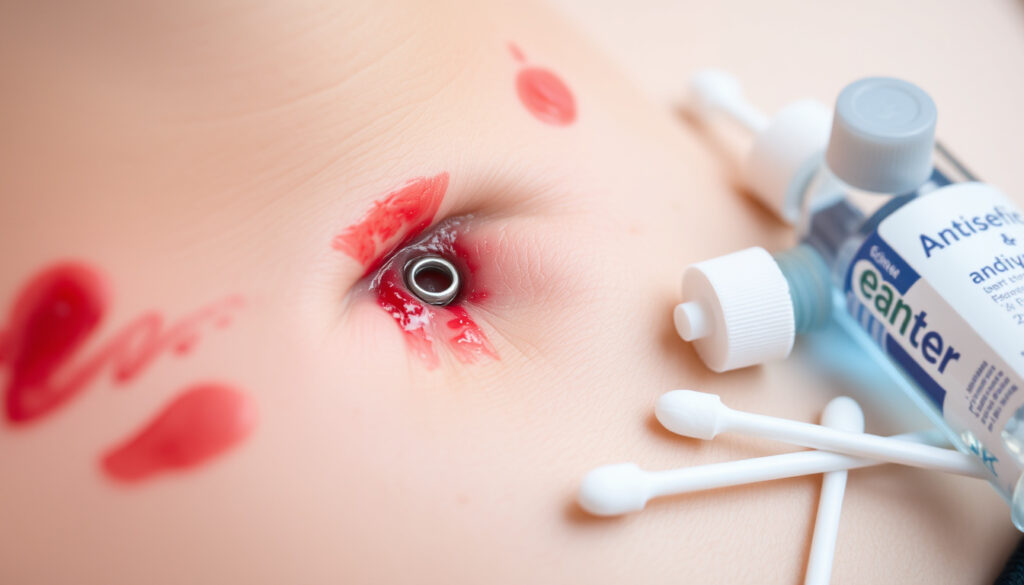
Belly Piercing: Pain, Risks, Aftercare, and Who Should Avoid It
Anyone who has stood in front of a piercing mirror knows the first question isn’t about looks—it’s about the pain, the healing, and whether your body is actually up for it. A belly piercing demands a long recovery, taking 6 months to a full year according to piercing studio guides like Mantra Tattoo (piercing studio resource), and the navel’s shape makes it more prone to infection than other piercings per WebMD (medical publisher).
Average healing time: 6 to 12 months ·
Typical pain level (1–10): 4–5 ·
Infection rate: Up to 20% of piercings ·
Typical cost: $30–$60
Quick snapshot
- Belly piercing creates an open wound requiring strict hygiene (Association of Professional Piercers)
- Healing typically takes 6 to 12 months (Mantra Tattoo)
- Infection risk increases with improper aftercare (WebMD)
- Exact pain tolerance varies widely by individual
- Long-term effects of specific jewelry materials on skin are not fully documented in clinical literature
- Rate of keloid formation among different populations is not precisely known
- Piercing takes seconds; initial swelling lasts 1–2 weeks (Tremun Piercing (piercing studio guide))
- Healing tunnel forms over 3–6 months (Tremun Piercing (piercing studio guide))
- Full maturation of tissue takes up to 12 months (Mantra Tattoo)
- Consistent daily aftercare for the entire healing period (Tremun Piercing guide)
- Watch for signs of infection (yellow/green discharge, heat, swelling) (Bodymod (piercing culture guide))
- Avoid swimming and high-impact exercise during healing (Urban Body Jewelry (aftercare guide))
A look at the five core data points that matter most for anyone weighing a belly piercing.
| Fact | Value | Source |
|---|---|---|
| Pain Level | 4–5 out of 10 | Industry consensus / self-reported |
| Healing Time | 6–12 months | Mantra Tattoo |
| Infection Risk | Up to 20% | WebMD |
| Cost | $30–$60 | Industry average |
| Safe Jewelry Materials | Surgical steel, titanium, niobium | Association of Professional Piercers |
How painful is a belly piercing?
What does the piercing feel like?
Pain is subjective, but the piercing itself lasts only a few seconds. Most people describe it as a sharp pinch followed by a dull ache.
The actual piercing lasts only a few seconds. Most people describe the sensation as a sharp pinch, similar to a quick blood draw, followed by a dull ache. The needle passes through skin and a small layer of fat. Numbing creams are not standard because they can alter skin texture, according to the Association of Professional Piercers (industry safety body).
How long does the pain last?
Pain after a belly piercing follows a predictable pattern, though individual thresholds vary.
| Phase | Expected Sensation |
|---|---|
| Piercing day | Sharp pinch, seconds |
| Week 1 | Tenderness, swelling |
| Weeks 2–4 | Residual dull ache |
| Months 1–3 | Sensitivity to friction |
The WebMD (medical reference publisher) notes that discomfort usually subsides significantly after the first week, but friction from clothing can keep the area sensitive for months.
The implication: if your lifestyle involves tight clothing or heavy physical work, expect the dull ache to stick around far longer than the piercing itself.
Is a belly piercing risky?
Common infections
The navel’s shape makes belly piercings more prone to infection than many other body piercings, according to WebMD.
Infection is the most frequent complication of navel piercings. The navel’s deep, folded shape traps moisture and bacteria, making it a higher-risk site than an earlobe or nostril piercing. Signs of infection include yellow or green discharge, increasing pain, heat radiating from the site, and a bump that doesn’t resolve. The Bodymod (piercing culture resource) warns that if the piercing needle is not sterile, the risk of hepatitis or tetanus is real.
Allergic reactions
Nickel allergies are the most common culprit. Low-cost jewelry is often the trigger.
Allergic reactions, especially to nickel found in low-cost jewelry, are another common complaint. Hypoallergenic materials such as surgical steel, titanium, or niobium are the industry standard for initial jewelry, per APP guidelines.
Keloids and scarring
Scarring is a permanent consideration. Keloids—raised, overgrown scar tissue—can form in people predisposed to them.
If you remove the jewelry, a visible scar or small dimple typically remains. The WebMD reference notes that tearing, scarring, and migration or rejection are documented risks of navel piercings.
The pattern: the risks are well-documented and largely manageable with the right jewelry, clean technique, and vigilant aftercare—but they cannot be eliminated entirely.
Who shouldn’t get a belly piercing?
Medical conditions that rule out piercing
Diabetes, immune disorders, and conditions that impair wound healing raise the risk profile significantly.
Piercing studios with professional standards typically ask about these conditions before proceeding. The WebMD overview recommends consulting a doctor if you have any chronic condition that affects healing.
Pregnancy and belly piercing
Pregnancy is a clear contraindication. The expanding abdomen can cause migration and rejection of the jewelry.
Existing piercings during pregnancy often need to be replaced with flexible retainers, but no new navel piercing should be performed on a pregnant person.
Active skin infections
If you have an active infection, rash, or open wound around the navel, a piercing is off the table until the skin is fully healed.
The APP safety guidelines are unambiguous on this point: sterile technique is unsafe on broken or infected skin.
What this means: the medical screening criteria are simple, but they filter out a significant number of would-be piercees. If you fall into any of these groups, the safest choice might be to hold off.
Can I shower after a belly piercing?
Showering safely after piercing
Showering is allowed, but the method matters. Direct high-pressure spray should be avoided.
The Association of Professional Piercers recommends using a mild, fragrance-free soap and letting water run over the area rather than blasting it. Pat the area dry with a clean paper towel afterward, never a bath towel.
What to avoid in the first weeks
Submersion is the main enemy. Pools, hot tubs, bathtubs, lakes, and oceans are all banned during the initial healing months.
These bodies of water introduce bacteria and chemicals to an open wound (Urban Body Jewelry aftercare guide).
The trade-off: you can keep your normal hygiene routine, but the piercing effectively locks you out of water-based leisure activities for most of a year.
Is it good to pierce your belly?
Pros of belly piercing
The aesthetic appeal is the primary driver, and the risk profile is manageable with professional piercing.
When performed by a professional with sterile equipment and appropriate jewelry, the complication rate is manageable for a healthy individual.
Cons and risks
The healing demands are substantial and friction from clothing is a constant source of irritation.
Friction from clothing (belts, waistbands, pyjama sets) is a daily challenge. Exercise involving abdominal movement can cause migration or rejection (Urban Body Jewelry fitness warning). Scarring is a permanent consequence if the jewelry is removed.
Long-term considerations
The mark and the months of aftercare are permanent. Matching your lifestyle to the healing demands is the decisive factor.
For someone with an active lifestyle involving yoga, swimming, or sports, healing can be complicated by the need to avoid certain movements and environments (yoga poses that compress the belly).
The catch: the piercing is reversible in the sense that jewelry can be removed, but the mark and the months of aftercare are not. Matching your lifestyle to the healing demands is the decisive factor.
Upsides
- Aesthetic enhancement is the most commonly cited benefit.
- Risk profile is manageable with professional piercing and vigilant aftercare.
- Healing, while long, is predictable for most healthy individuals.
Downsides
- High long-term commitment: demands attention for 6–12 months.
- Scarring is a permanent consequence if the jewelry is removed.
- Friction from clothing is a constant source of irritation during healing.
- Exercise with significant abdominal movement can cause migration or rejection.
Step-by-step aftercare guide
The daily cleaning routine
A consistent cleaning routine is the single most effective way to reduce infection risk. The APP (industry safety body) provides a clear, evidence-based protocol.
- Wash your hands thoroughly with antibacterial soap before any contact with the piercing.
- Clean the piercing twice daily with sterile saline spray or a gentle, fragrance-free soap. The Tremun Piercing guide emphasizes that harsh chemicals like alcohol or hydrogen peroxide should never be used, as they damage healing cells.
- Rinse thoroughly with warm water to remove any soap residue.
- Pat dry with a clean disposable paper towel. Avoid cloth towels, which harbor bacteria.
- Leave it alone. The APP guidelines explicitly say do not twist, spin, or rotate the jewelry during healing—this irritates the channel and prolongs healing.
What to watch for
Normal healing has some discomfort, but specific signs require immediate attention.
The Bodymod healing guide lists thick yellow or green discharge, increasing pain beyond the first week, heat radiating from the navel, and a painful bump as red flags. If these appear, consult a healthcare provider or your piercer immediately.
Confirmed facts vs. what remains unclear
Confirmed facts
- Belly piercing creates an open wound requiring strict hygiene for 6–12 months.
- Improper aftercare significantly increases the risk of infection.
- Sterile saline cleaning twice daily is the standard aftercare protocol.
- Healing typically takes 6 to 12 months.
What’s unclear
- Exact pain tolerance varies by individual and cannot be precisely predicted.
- The long-term effects of specific jewelry materials on skin are not fully documented in clinical literature.
- The rate of keloid formation across different populations is not precisely known.
- Whether minor lifestyle adjustments meaningfully alter healing speed is based mostly on practitioner experience, not controlled studies.
The implication: the risks are well understood, but the human variables make each piercing experience slightly different. A good piercer accounts for this nuance.
Expert perspectives
“Belly button piercing is a piercing through the skin around the navel, and carries risks like infection and scarring.”
— WebMD (medical editorial team)
“Fresh piercings should be cleaned with saline solution and not touched with unwashed hands.”
— Association of Professional Piercers (industry safety standards body)
“Friction and pressure from clothing, excessive movement, playing with jewelry, and vigorous cleaning can contribute to scar tissue, migration, and prolonged healing.”
— Association of Professional Piercers (aftercare guideline)
“A common concern during healing is thick yellow or green discharge, increasing pain, heat, swelling beyond the navel, or a painful bump.”
— Bodymod (piercing healing resource)
The takeaway: the consensus across medical and professional piercing sources is clear—hygiene and proper jewelry are non-negotiable.
Summary
The decision to get a belly piercing is rarely a medical one—it is an aesthetic one. But the health implications are serious enough that they deserve the same consideration as the look. For anyone sitting in that piercing chair, the choice is not just about jewelry. It is about committing to a year of careful hygiene, accepting the possibility of scarring, and understanding that daily habits—clothing, exercise, swimming—will be constrained for months. For the typical healthy adult working with a professional piercer, the risks are manageable. For someone with a healing condition, a pregnancy, or an active lifestyle involving water sports, the risk-to-reward balance tilts sharply the other way: the safest choice is to pass, or wait.
carribbean-connection.com, bodyjewelry.com, mantratattoo.us, us.pierceduniverse.com, reddit.com, webmd.com, newstakt.de
For a detailed look at the pain and healing timeline, see this guide on belly piercing pain and healing.
Frequently asked questions
Do I need a flat stomach to get a belly piercing?
No. Anatomy matters more than flatness. What matters is the shape of the navel ridge and whether there is enough tissue to securely anchor the jewelry without migration risk. A piercer will assess your specific anatomy.
Is the belly button basically a scar?
It is not a scar. It is the remnant of the umbilical cord attachment. The tissue is normal skin, though it is often folded and can trap moisture, which is a factor in piercing infection risk.
What does touching a girl’s belly button do?
Stimulation of the navel can be pleasurable for some people due to the dense nerve endings, but there is no specific physiological response beyond general touch sensation. For a healing piercing, touching with unwashed hands increases infection risk.
Can I exercise after a belly piercing?
Yes, but avoid exercises that put direct pressure on the abdomen or involve heavy twisting, such as sit-ups, crunches, yoga poses with belly compression, and weightlifting that requires a weight belt (Urban Body Jewelry). Light cardio is generally fine after the initial soreness subsides.
What are the signs of an infected belly piercing?
Thick yellow or green discharge, increasing redness or pain beyond the first week, a burning sensation, a painful bump at the entry or exit point, and swelling that extends beyond the navel. Fever is a serious sign requiring immediate medical attention (Bodymod).
How do I change the jewelry in my belly piercing?
Wait until the piercing is fully healed (6–12 months). Changing it too early can cause irritation, tearing, or closure of the channel. Have a professional piercer make the first change to ensure appropriate sizing and material (APP).
Can I swim with a new belly piercing?
Swimming in pools, hot tubs, lakes, or oceans is strongly discouraged until the piercing is fully healed. Submerged water introduces bacteria and chemicals that can cause infection (Good Vibrations Ink Orlando (piercer blog)).
More related posts
 Simon Neil Biffy Clyro: Age, Wife, Children, Net Worth & More
 Harley Moon Kemp Partner – Debunking Danny Cipriani Rumors
 Cardiff City vs Newport County: Head-to-Head & Preview
 Bob Dylan: His Life, Music, Health & Relationships
 Who Is Elon Musk? Biography, Net Worth, Children, and More
 Gloria Hunniford: Husband, Weight Loss, Daughter & Career Updates
 Michael Keaton: Biography, Age, Movies, and Net Worth