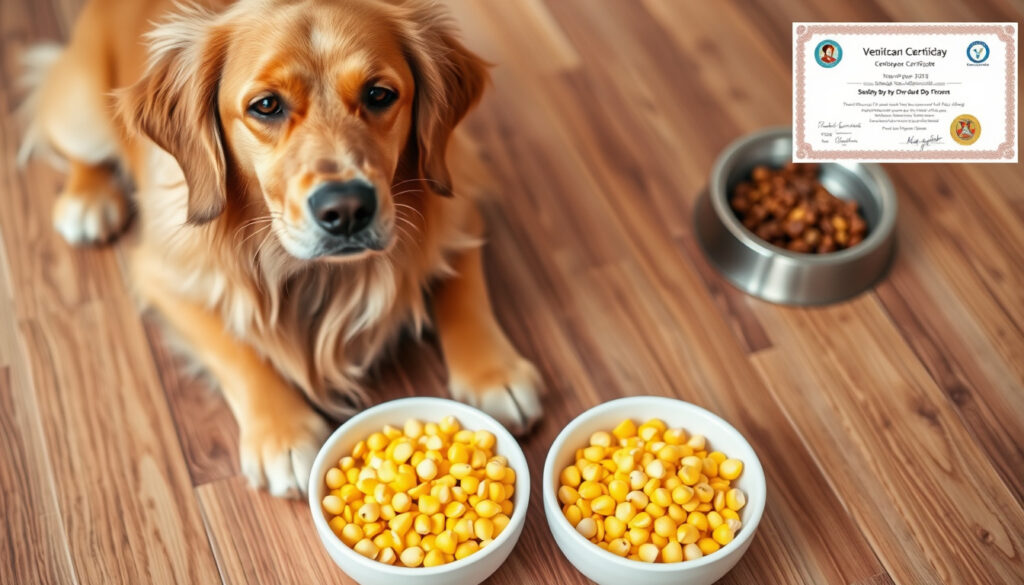
Can Dogs Eat Sweetcorn? Safety, Benefits & Risks (Vet Approved)
You’re standing in the kitchen, about to toss a few sweetcorn kernels to your dog waiting eagerly at your feet. Before you do, there are a few things worth knowing. This vet-reviewed guide walks you through which forms of sweetcorn are safe, which ones pose real dangers, and exactly how to serve it so your pup stays healthy and happy.
Sweetcorn kernels (cooked, plain): Safe in moderation ·
Sweetcorn on the cob: Dangerous – choking and intestinal blockage risk ·
Canned sweetcorn: Often high in salt and sugar – not recommended ·
Calories per 100g sweetcorn: 96 kcal
Quick snapshot
- Plain cooked sweetcorn kernels are safe for dogs (BewDogs (pet nutrition resource))
- Corn on the cob poses choking and blockage risks (Park Vet Group (veterinary practice))
- Long-term effects of regular sweetcorn consumption are not well studied
- Safe amounts for dogs with diabetes or kidney conditions require veterinary guidance
- No known updates; guidance is consistent across veterinary sources as of 2025
- More research on sweetcorn’s glycemic impact on dogs with diabetes may clarify safe portions
Six key facts at a glance — the difference between a safe treat and a trip to the vet often comes down to preparation and form.
| Label | Value |
|---|---|
| Safe forms | Cooked kernels (plain) |
| Unsafe forms | Corn on the cob, canned with additives |
| Max serving (small dog) | 1–2 tablespoons |
| Max serving (large dog) | 1/4 cup |
| Frequency | 2–3 times per week |
| Key nutrient | Fiber, Vitamin C, B vitamins |
Sweetcorn can be a healthy occasional snack for dogs — but only as plain, cooked kernels. One wrong form (the cob) and the risk shifts from treat to emergency.
Is Sweetcorn Safe for Dogs to Eat?
Nutritional Benefits of Sweetcorn for Dogs
- Sweetcorn provides dietary fibre, antioxidants, and vitamins C and B when fed to dogs (BewDogs (pet nutrition resource)).
- With just 96 kcal per 100g, sweetcorn is a relatively low-calorie treat compared to many commercial dog snacks.
- Corn is generally safe for dogs in small amounts but is high in sugar and should not be fed in large quantities (Park Vet Group (veterinary practice)).
Potential Risks and Side Effects
- Corn on the cob should not be fed to dogs because the cob poses a choking hazard and risk of intestinal blockage (Pooch & Mutt (pet food brand)).
- Raw corn can be difficult for dogs to digest and may cause gastrointestinal upset (Pooch & Mutt (pet food brand)).
- Corn on the cob can be dangerous for dogs and may cause gastrointestinal blockage if ingested (Park Vet Group (veterinary practice)).
Veterinary Consensus on Sweetcorn
- Dogs can safely eat sweetcorn in moderation, provided it is cooked and unseasoned (BewDogs (pet nutrition resource)).
- Sweetcorn should be fed only as an occasional treat and in moderation to dogs (Pooch & Mutt (pet food brand)).
- Corn should be cooked (steamed or boiled) before feeding to dogs to improve digestibility (PetMD (veterinary health platform)).
“Corn is generally safe to eat, but as it is high in sugar it should not be fed to them in large quantities. We also recommend that you check your dog’s teeth or…”
— Veterinarian at Primrose Hill Vets
Can Dogs Eat Canned Sweetcorn?
Differences Between Fresh, Frozen, and Canned Sweetcorn
- Fresh or frozen sweetcorn (cooked) is the preferred option for dogs.
- Canned sweetcorn should be avoided for dogs because of high sugar and salt content, which can contribute to dehydration and sodium poisoning (BewDogs (pet nutrition resource)).
- Avoid feeding your dog tinned sweetcorn as it tends to contain salt and sugar, both of which are no good for your dog. Stick to frozen or fresh (Agria Pet Insurance guidance via Pooch & Mutt).
Why Sodium and Sugar in Canned Corn Are Problematic
- Even ‘no-salt-added’ canned corn may be processed with preservatives.
- High sodium intake can lead to dehydration and, in severe cases, sodium poisoning in dogs.
- Added sugars contribute to weight gain and dental issues over time.
How to Safely Prepare Canned Sweetcorn for Dogs (if chosen)
- If using canned, rinse thoroughly and choose low-sodium varieties.
- Check the label for added sugars, salt, or preservatives before serving.
- Limit to a small portion — no more than 1 tablespoon for small dogs, 2 tablespoons for larger breeds.
Canned sweetcorn is often marketed as “convenient,” but for dog owners, that convenience comes with hidden salt and sugar that can harm your pet over time. Fresh or frozen sweetcorn gives you full control over what goes into the bowl.
The implication: canned sweetcorn is a poor choice for dogs unless you carefully select low-sodium, no-sugar-added varieties and rinse thoroughly. Even then, fresh or frozen is safer and simpler.
Can Dogs Eat Sweetcorn on the Cob?
Choking Hazard of Corn Cobs
- Corn on the cob should never be given to dogs because it can cause choking or intestinal blockage (PetMD (veterinary health platform)).
- Large breed dogs may still struggle to pass a cob if swallowed.
- Never leave corn cobs within reach of dogs.
Symptoms of Intestinal Blockage in Dogs
- If a dog eats the core of a corn cob, owners should monitor closely for vomiting, diarrhoea, or other signs of gastrointestinal distress and contact a vet (Park Vet Group (veterinary practice)).
- Additional symptoms: loss of appetite, abdominal pain, lethargy, difficulty defecating.
- If you suspect your dog swallowed a cob, contact a vet immediately.
What to Do If Your Dog Eats a Corn Cob
- If a dog eats only the kernels of corn, there is usually no cause for concern unless the dog shows signs of distress (Park Vet Group (veterinary practice)).
- Monitor your dog closely for 24-48 hours for any signs of blockage.
- Do not induce vomiting unless instructed by your veterinarian — a cob can cause damage on the way back up.
“Corn on the cob should not be fed to dogs because the cob poses a choking hazard and risk of intestinal blockage.”
— Pooch & Mutt (pet food brand)
The catch: the cob is the real danger here, not the kernels. A dog that sneaks a cob from the barbecue can face emergency surgery. Prevention is the only reliable strategy.
Can Dogs Eat Sweetcorn with Other Foods?
Sweetcorn and Tuna – Is It Safe?
- Tuna is safe in small amounts (choose tuna in water, no salt).
- Avoid mixing sweetcorn with onions, garlic, or excessive fats.
- Stick to plain, cooked combinations without seasonings.
Sweetcorn and Peas – A Healthy Mix?
- Peas are nutritious and safe for dogs — they provide additional fibre and protein.
- A mix of cooked sweetcorn and peas can make a healthy, low-calorie treat.
- Always serve vegetables plain — no butter, salt, or oil.
Other Vegetables That Pair Well with Sweetcorn
- Carrots (cooked or raw, in small pieces), green beans, and cucumber are excellent options.
- Corn cooked with onions or garlic should never be fed to dogs because both ingredients are toxic to dogs (PetMD (veterinary health platform)).
- Avoid starchy vegetables like potatoes in large quantities — they add extra calories.
The most common mistake dog owners make is adding seasonings or mixing sweetcorn with toxic ingredients like onions or garlic. Keep it plain, and your dog gets a safe, healthy treat.
The pattern: sweetcorn pairs well with many dog-safe vegetables. But the moment you add human seasonings or problematic mix-ins, the nutritional value drops and the risk rises.
How to Safely Feed Sweetcorn to Your Dog
Choosing the Right Sweetcorn
- Fresh sweetcorn (cooked) or frozen sweetcorn (cooked) are the best options.
- Avoid canned sweetcorn unless it’s low-sodium and thoroughly rinsed.
- Never feed raw sweetcorn — it’s hard to digest (Pooch & Mutt (pet food brand)).
Cooking and Preparation Steps
- Cook sweetcorn until tender — boil or steam for best results.
- Cut kernels off the cob before serving.
- Let cool to room temperature — hot corn can burn your dog’s mouth.
- No butter, salt, oil, or spices (PetMD (veterinary health platform)).
Serving Size and Frequency Guidelines
- Small dogs (under 10 kg): 1–2 tablespoons per serving.
- Large dogs (over 20 kg): Up to 1/4 cup per serving.
- Limit to 2–3 times per week at most — sweetcorn is a treat, not a meal replacement.
- Start with a small piece to check for allergies or digestive upset.
Signs Your Dog Tolerates Sweetcorn Well
- Normal appetite and energy levels after eating.
- No vomiting, diarrhoea, or excessive gas within 24 hours.
- Stool consistency remains normal — undigested corn kernels in stool can indicate portion is too large.
Frequently asked questions
Can dogs eat sweetcorn every day?
It’s not recommended. Sweetcorn is high in natural sugars and should only be fed as an occasional treat — 2 to 3 times per week at most.
How much sweetcorn can a dog eat?
Small dogs (under 10 kg): 1–2 tablespoons per serving. Large dogs (over 20 kg): up to 1/4 cup per serving.
Can puppies eat sweetcorn?
Puppies can eat small amounts of plain cooked sweetcorn, but always check with your vet first. Puppies have sensitive digestive systems.
Is sweetcorn good for dogs with diabetes?
Sweetcorn has a moderate glycemic index. Dogs with diabetes should only eat sweetcorn under veterinary guidance due to its sugar content.
Can dogs eat frozen sweetcorn?
Frozen sweetcorn should be cooked before serving. Raw frozen corn is hard to digest and may cause gastrointestinal upset.
What should I do if my dog eats a corn cob?
Contact your veterinarian immediately. Monitor for vomiting, diarrhoea, loss of appetite, or signs of abdominal pain. Do not induce vomiting unless instructed.
Can dogs eat sweetcorn straight from the garden?
No. Raw sweetcorn is difficult for dogs to digest and may cause stomach upset. Always cook it first.
Does sweetcorn cause allergies in dogs?
Corn allergies are rare in dogs but possible. If you notice itching, skin rashes, or digestive issues after feeding sweetcorn, discontinue and consult your vet.
Upsides
- Provides fibre, vitamins C and B, and antioxidants
- Low-calorie treat option (96 kcal per 100g)
- Easy to prepare and mix with other dog-safe vegetables
- Readily available fresh, frozen, or in controlled canned forms
Downsides
- Corn on the cob poses life-threatening choking and blockage risks
- Canned sweetcorn often contains harmful salt and sugar
- Raw sweetcorn is difficult for dogs to digest
- High sugar content means it must be fed in strict moderation
For the average dog owner, the choice is clear: serve sweetcorn as plain cooked kernels, skip the cob entirely, and keep the portions small. Your dog gets a tasty, fibre-rich treat — and you avoid a costly emergency vet visit.
More related posts
 Co-op Closing Time Near Me: Complete Store Hours Guide
 Joe Wicks: Biography, Fitness Method, and Family
 Ananya Panday: Biography, Age, Height, Movies & Facts
 Tony Pitts: Biography, Career, and Personal Life
 Carolyn Bessette: Life, Wedding, Death and Burial at Sea
 Things to Do in Norwich: Landmarks, Markets & Hidden Gems
 Royal Bank of Scotland: History, Collapse, Ownership, Scandal
 Song Hye-kyo Relationship Status: Husband, Exes, and Dating History