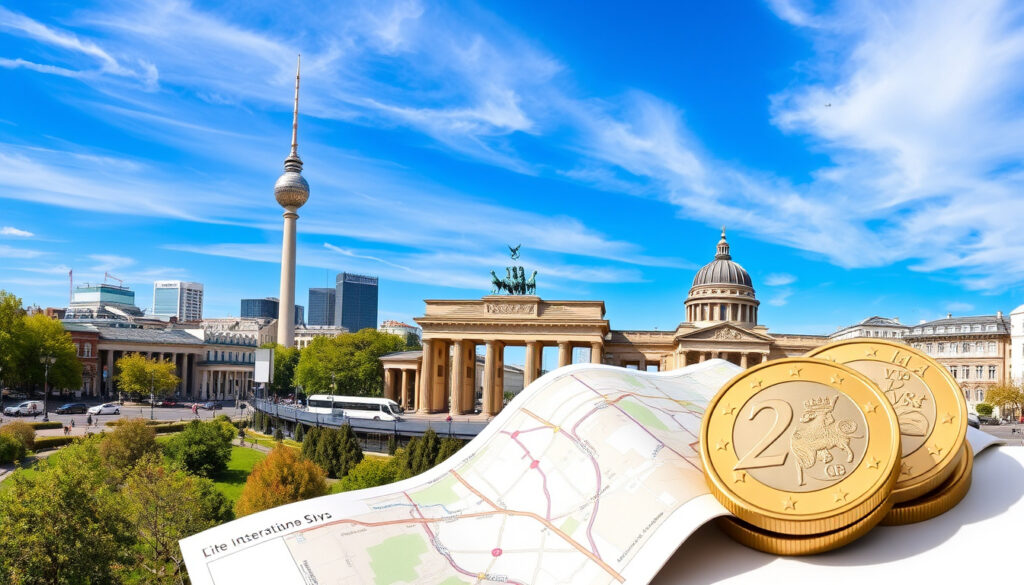
Things to Do in Berlin: Top Attractions & Budget Tips
Berlin offers over 100 completely free attractions—more than almost any other European capital—yet the density of its history makes even veteran travelers overlook some of the best ones. This guide cuts through the noise: verified freebies, official sources, and the kind of local detail that actually shapes how you spend your time and budget.
Top Sights: Brandenburg Gate, Reichstag, TV Tower ·
Ideal Stay: 3-5 days ·
Daily Budget Possible: 100 euros ·
Free Activities: 33+ ·
Population: 3.7 million
The upshot: Berlin rewards visitors who walk and plan ahead. Most major sights cost nothing to enter, public transport costs €3.50 per day, and the best experiences—Brandenburg Gate at sunrise, Museum Island on a free Thursday, Tempelhofer Feld’s runway paths—require no budget beyond time.
Quick snapshot
- Brandenburg Gate built in 1791 (Generali Travel Insurance)
- East Side Gallery spans over 1 km (Tourism Attractions)
- Victory Column climb has 270 steps, costs €3.50 (Budget Traveller)
- Exact 2026 free festival calendars remain unpublished
- Wheelchair accessibility details for all free sites not fully verified
- Monthly crowd-level data by attraction still emerging
- Brandenburg Gate construction: 1791
- Free museum Thursdays ongoing 2026
- Sample itinerary start time: 7:30 AM daily
- Book Reichstag Dome online in advance
- Plan Thursday for free museum hours 4-8 PM
- Use M100 bus for cheapest panoramic route
These figures show how Berlin stacks up on the essentials that matter most to budget travelers.
| Category | Details |
|---|---|
| Official Top Sights | Brandenburg Gate, Reichstag, Victory Column |
| Free Activities Count | 33 from Budget Traveller |
| Budget Per Day | 100 euros sufficient |
| Key Neighborhood | Neukölln multicultural |
| Holocaust Memorial Stelae | 2,711 |
| Parks Combined Size | 500+ hectares (Tiergarten + Tempelhofer Feld) |
| Transport Day Pass | €3.50 |
| Museum Island Free Hours | Thursdays 4-8 PM (Pergamon, Alte Nationalgalerie, Bode, Neues) |
What should you not miss in Berlin?
If your time in Berlin is short, three places anchor any visit. The Brandenburg Gate, built in 1791, is the city’s most recognizable landmark and a symbol of German reunification that still carries visible weight when you stand before it. According to Generali Travel Insurance (travel guide), this gate draws visitors day and night, each offering a different character worth experiencing.
Reichstag Dome
The Reichstag Dome tops nearly every insider list. Entry is free, but you must book online in advance and bring photo ID for security screening, as detailed by Lonely Planet (authoritative travel guide). The glass dome delivers 360-degree views of the city from a rooftop walkway that costs nothing extra—arguably the best panorama in Berlin.
Holocaust Memorial
The Memorial to the Murdered Jews of Europe sits just south of the gate, featuring 2,711 concrete stelae spread across a grid-like field. Entry is free and open around the clock, according to Machupicchu.org (budget travel guide). Most visitors spend 20-45 minutes walking through the undulating stelae—a quiet, deliberate space that demands a different kind of attention than a typical tourist stop.
These three sites cost nothing to enter but require timing and preparation: book the Reichstag dome ahead, and aim to visit the Holocaust Memorial early morning or late evening to avoid crowds and actually feel the space.
What are the main attractions in Berlin?
Beyond the obvious icons, Berlin rewards visitors who dig slightly deeper. The East Side Gallery is the largest preserved section of the Berlin Wall, stretching over 1 km along the Spree River, covered in murals that address freedom, division, and hope. Tourism Attractions (budget guide) describes it as an open-air gallery that functions as both history lesson and street art showcase.
Victory Column and Tiergarten
Victory Column sits in the heart of Tiergarten, Berlin’s central park spanning 210 hectares. The column’s exterior viewing is free, and the 270-step climb to the top costs €3.50, as noted by Budget Traveller (budget travel specialist). Combine this with a walk through Tiergarten’s wooded paths—completely free—making this one of the best zero-cost afternoons in the city.
Checkpoint Charlie and Museum Island
Checkpoint Charlie remains a tourist hotspot despite repeated calls by historians to reframe its significance—it’s more a media-created icon than a site of primary historical importance. Museum Island offers better historical depth: four major institutions (Pergamon, Alte Nationalgalerie, Bode Museum, Neues Museum) offer free entry every Thursday between 4-8 PM in 2026, per Machupicchu.org (budget travel guide). Bode Museum also offers free entry on the first Sunday of each month, according to GetYourGuide (tour activities platform).
Unter den Linden and Gendarmenmarkt
Unter den Linden runs 1 mile from Pariser Platz to Museum Island, lined with linden trees and punctuated by monuments. Wander Germany (regional travel guide) highlights this as the city’s most dignified boulevard, featuring Neue Wache Memorial along its route. Nearby, Gendarmenmarkt square—often called Berlin’s most beautiful—showcases the Konzerthaus flanked by the German and French Domes.
The real value in Berlin’s attraction landscape isn’t just the monuments—it’s the layering: a walk down Unter den Linden connects you to Prussian grandeur, Cold War history, and contemporary street life in less than two kilometers.
How many days in Berlin is enough?
Three full days covers the essentials comfortably. A tight itinerary works like this: Brandenburg Gate at 7:30 AM, Holocaust Memorial, then Bebelplatz—arranged to hit major sites in the morning when crowds are thinner. Machupicchu.org (budget travel guide) maps this morning route as a free walking tour in itself.
3-Day Itinerary
- Day 1: Mitte landmarks (Brandenburg Gate, Reichstag, Holocaust Memorial, Unter den Linden)
- Day 2: Museum Island and East Side Gallery via M100 bus
- Day 3: Tiergarten, Tempelhofer Feld, local neighborhood exploration (Kreuzberg or Neukölln)
Ideal 5-Day Visit
Five days allows deeper exploration of neighborhoods like Neukölln and Friedrichshain, where multicultural street life and flea markets reward slower pacing. visitBerlin.de (official city tourism portal) lists free events that only become accessible when you have extra time—markets, outdoor concerts, seasonal festivals that don’t fit neatly into a compressed weekend itinerary.
Is Berlin cheap or expensive?
Berlin sits in an unusual position: it’s one of Western Europe’s most affordable capitals for visitors, yet prices have climbed steadily since reunification. According to Machupicchu.org (budget travel guide), 100 euros per day covers accommodation in a hostel dorm, street food, public transport, and entry fees for paid attractions with room to spare.
Daily Costs Breakdown
- Transport: Day pass costs €3.50 for unlimited access across zones A and B
- Food: Street currywurst runs €3-5; döner kebab €4-6; proper sit-down lunch €10-15
- Attractions: Most major sights are free; paid entries like TV Tower (€16-22) are optional
- Accommodation: Hostel dorms average €20-35; budget hotels €60-100
Budget Tips
Free walking tours operate on a donation basis covering Checkpoint Charlie, the Holocaust Memorial, and government quarter history. Budget Traveller (budget travel specialist) identifies over 33 free activities across the city, including parks exceeding 500 combined hectares at Tiergarten and Tempelhofer Feld. The M100 bus offers the cheapest panoramic route past major sights for the price of a standard AB ticket, as noted by The Berliner (local budget guide).
Berlin rewards budget travelers willing to walk and plan ahead: the city is exceptionally generous with free monuments, parks, and 24/7 public spaces, but accommodation in central Mitte commands premiums that quickly erode a tight daily budget.
What are the do’s and don’ts in Berlin?
Basic etiquette in Berlin follows European norms, but certain behaviors matter more here than in other capitals.
Safety at Night
According to visitBerlin.de (official city tourism portal), most central neighborhoods are safe after dark, though visitors should exercise standard urban caution in areas around certain U-Bahn stations late at night. The city maintains a visible but unobtrusive police presence around nightlife zones in Friedrichshain and Kreuzberg.
Local Etiquette
- Tipping: Round up 5-10% at restaurants; round to nearest euro for taxis
- Punctuality: Berlin runs on time—late arrivals signal disrespect
- Cash preference: Many small restaurants and markets still prefer cash over cards
- Bike lanes: Always yield to cyclists; walking in marked lanes invites trouble
- Quiet hours: Sunday shopping restrictions are strict; plan accordingly
Berlin’s Sin City Reputation
Berlin earned its “sin city” nickname from the Weimar-era cabarets and nightlife that operated openly when other German cities enforced stricter social codes. Today, that legacy manifests in a nightlife scene that remains notably liberal—clubs operate without the early closing hours common in other capitals, and the city tolerates a level of public social expression (open-container laws, street drinking) that surprises first-time visitors from more regulated countries.
“For dress-circle vistas of central Berlin, head to the Reichstag Dome.”
— Lonely Planet (authoritative travel guide)
“Exploring Berlin on a budget is not only possible but also incredibly rewarding.”
— Tourism Attractions (budget guide)
Berlin’s budget-friendliness comes with a trade-off: accommodation quality varies wildly, and the city’s ongoing housing crunch means some neighborhoods feel rougher than their distance from the center suggests. Book lodging early and verify reviews before committing.
Three things stand out when you step back: Berlin’s free attraction density is genuinely exceptional—over 100 monuments, memorials, and outdoor spaces require no admission fee. The public transport network makes car-free exploration practical and affordable at €3.50 per day. And the city rewards slow travelers willing to wander beyond the Brandenburg Gate radius into neighborhoods like Neukölln and Tempelhof, where the real texture lives.
Related reading: German to English translator · Food spots near me
While exploring budget itineraries around the Brandenburg Gate, many turn to this essential Berlin travelers guide for additional historical insights and practical tips.
Frequently asked questions
What are things to do in Berlin for young adults?
Young adults gravitate toward Kreuzberg and Friedrichshain for nightlife, street art tours around the East Side Gallery, and Tempelhofer Feld for outdoor recreation. The Mauerpark Sunday flea market in Prenzlauer Berg draws a younger crowd with live music, vintage stalls, and open-air karaoke. Budget Traveller identifies these neighborhoods as offering the highest concentration of free social activities that don’t require museum admission or formal itineraries.
What are fun things to do in Berlin for couples?
Couples benefit from Berlin’s mix of romantic parks and cultural depth. Tiergarten offers secluded paths for walking, while Viktoriapark provides free panoramic hilltop views best enjoyed at sunset. Museum Island’s free Thursday hours (4-8 PM) let couples explore world-class collections without budget pressure. The city also hosts intimate jazz bars and theater districts that operate well into the early morning—unusual for a Western European capital.
What things to do in Berlin with kids?
Berlin Zoo ranks among Europe’s best family attractions, while the Legoland Discovery Centre provides indoor options for rainy days. Tiergarten and Tempelhofer Feld offer sprawling green space for running and cycling, with Tempelhof’s runway paths particularly thrilling for children. The Futurium museum hosts free interactive exhibitions on future living that appeal to curious young minds without demanding admission fees.
What are unusual things to do in Berlin?
Beyond the standard itinerary, Berlin rewards the unusual: climbing the Drachenberg rubble mountain for city panoramas (free), exploring WWII flak tower bunkers in Volkspark Humboldthain, wandering through Hackesche Höfe’ decorative courtyards, or visiting Classic Remise Berlin for a free classic car collection. Lonely Planet (authoritative travel guide) highlights these as the kind of discoveries that separate experienced Berlin visitors from first-timers.
Is Berlin safe at night?
Berlin maintains a reputation as one of Europe’s safer capitals for night travel. Standard urban precautions apply—guard valuables in crowded nightlife areas and avoid poorly lit U-Bahn stations after 1 AM. According to visitBerlin.de (official city tourism portal), most central neighborhoods welcome evening visitors without incident. The city’s 24-hour public transport on weekends means you rarely need taxis or rideshares.
Why is Berlin called the sin city?
The label traces to the Weimar Republic era (1919-1933), when Berlin operated as a European hub for open nightlife, cabaret, and sexual expression that other cities suppressed. Cabarets in districts like Friedrichstrasse attracted international audiences with politically charged performance art. The Nazi regime closed most of these spaces, but Berlin’s post-war reconstruction and particularly the Cold War division created a psychological legacy that later informed the city’s intentionally liberal atmosphere in matters of nightlife, public space, and social expression.
What things to do in Berlin in December?
December transforms Berlin with Christmas markets, and the city operates roughly 60 seasonal markets across neighborhoods. Gendarmenmarkt hosts one of the most atmospheric markets near the German and French Domes. The cold pushes indoor attractions—museums, the Futurium, and shopping arcades like Hackesche Höfe—to the foreground. New Year’s Eve brings an unusually open celebration at Brandenburg Gate with a public party that ranks among Europe’s largest.
More related posts
 Dame Edna Everage: Real Life, Gender, Death & Legacy | Facts
 Em Rata: Who Is Emily Ratajkowski? Facts & Rumors
 What Is Low Blood Pressure – Symptoms, Risks and Remedies
 The Boat Race 2025 – Cambridge Clean Sweep Results
 Members of Oasis Band – 2025 Reunion Lineup and Ages
 Ella Rutherford: Age, Net Worth, and Portsmouth Move
 Malachi Barton: Age, Height, Movies, and Relationship Facts
 Klay Thompson 2025: Net Worth, Rumors & Career Update