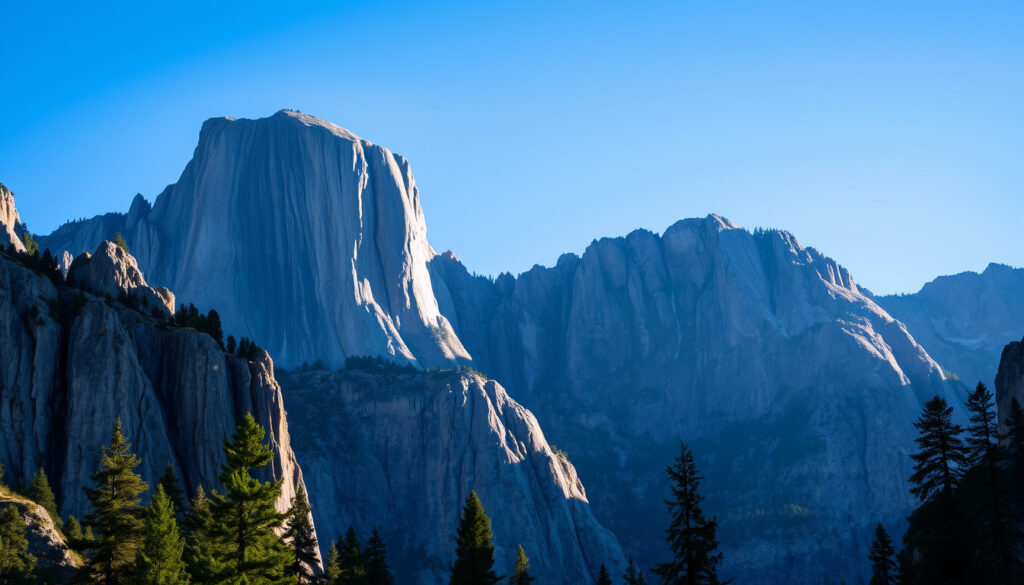
El Capitan: Yosemite’s Legendary Wall – Climbing, Height, History
You don’t have to be a climber to feel the pull of El Capitan, a sheer granite wall in Yosemite National Park that rises nearly 3,000 feet. This monolith has become a global symbol of endurance and daring, from the first ascent in 1958 to Alex Honnold’s rope-free solo in 2017.
Height (summit elevation): 7,569 ft (2,307 m) ·
Vertical rise: ≈ 3,000 ft (900 m) ·
First successful ascent: 1958 (Warren Harding team, The Nose) ·
Number of climbing routes: over 100 ·
Fastest free solo (The Nose): Alex Honnold, 3 h 56 min (2017)
Quick snapshot
- First ascent of The Nose: November 12, 1958 (U.S. National Park Service (official climbing history))
- Alex Honnold free soloed the Freerider route on June 3, 2017 (Wikipedia (climbing encyclopedia))
- Lynn Hill completed the first free ascent of The Nose in 1993 (Wikipedia (climbing encyclopedia))
- Exact number of climbing fatalities — no official tally, estimates range 30–40 (Wikipedia (climbing encyclopedia))
- Exact number of documented routes if minor variations are counted (Wikipedia (climbing encyclopedia))
- 1958: First ascent of The Nose (47 days, siege tactics) (U.S. National Park Service (official climbing history))
- 1993: Lynn Hill free ascends The Nose (Wikipedia (climbing encyclopedia))
- 2017: Alex Honnold free solos The Nose in 3h56m (Wikipedia (climbing encyclopedia))
- Continued speed record attempts on The Nose (current roped record under 2 hours) (Touchstone Climbing (Yosemite climbing history))
Seven key facts offer a baseline for anyone new to El Capitan.
| Label | Value |
|---|---|
| Elevation | 7,569 ft (2,307 m) |
| Rock type | Granite |
| First successful ascent | 1958 (Warren Harding, Wayne Merry, George Whitmore) |
| First free ascent | The Nose, Lynn Hill, 1993 |
| First free solo | Alex Honnold, The Nose, 2017 |
| Number of climbing routes | Over 100 |
| Annual climbers estimate | Approximately 5,000 big wall attempts |
Why Is El Capitan So Famous?
The iconic profile and geological significance
El Capitan is one of the world’s largest granite monoliths, with a vertical face of about 3,000 feet (914 m) from base to summit. According to Wikipedia (climbing encyclopedia), its sheer size and clean crack systems make it a natural magnet for climbers. The formation was known as “To‑tok‑a‑nu‑u‑la” by the Ahwahneechee people long before Spanish or American settlers arrived.
Role in Yosemite Valley and American climbing history
- The first ascent of The Nose in 1958 by Warren Harding, Wayne Merry, and George Whitmore took 47 days of fixed‑rope siege tactics (U.S. National Park Service (official climbing history)).
- By the 1970s, Yosemite climbing shifted toward free climbing, aided by improved gear (Touchstone Climbing (Yosemite climbing history)).
- El Capitan now features over 100 documented routes (Lasting Adventures (Yosemite tour operator)).
Media exposure: Free Solo film and documentaries
The 2018 documentary Free Solo brought worldwide attention to Alex Honnold’s 2017 ascent. Honnold became the first person to free solo El Capitan, climbing the Freerider route (about 2,900 ft) in 3 hours 56 minutes (Wikipedia (climbing encyclopedia)). The film won an Academy Award and turned the wall into a household name.
The implication: El Capitan’s fame is not just about size — it’s a stage where climbing history has been rewritten again and again.
How Many Climbers Have Died on El Capitan?
Estimated fatality numbers (no official registry)
According to Wikipedia (climbing encyclopedia), no exact official count of climbing deaths exists. Estimates from climbing community sources range from 30 to 40 fatalities since the 1960s. The first recorded death occurred in 1966.
Common causes: falls, rockfall, weather, equipment failure
- Falls (leader or belay errors) account for the majority of incidents.
- Rockfall and sudden weather shifts also contribute to accidents.
- Equipment failure, though less common, has been cited in some reports.
Comparison to other big walls
Despite the number of ascents (thousands per year), the fatality rate on El Capitan is relatively low. For context, Yosemite’s Half Dome has also seen fatalities, but the big‑wall environment of El Capitan demands more technical experience, which may filter out the most unprepared climbers.
The risk is real but not out of line with other major big‑wall objectives.
Who Is the Only Person to Free Solo El Capitan?
Alex Honnold’s free solo of The Nose (June 3, 2017)
Alex Honnold is the only person known to have free soloed El Capitan. On June 3, 2017, he climbed the Freerider route in 3 hours 56 minutes (Wikipedia (climbing encyclopedia)).
What “free solo” means: no ropes, no protection
Free soloing means climbing without ropes, harnesses, or any protective gear. A single mistake is fatal. Honnold’s ascent is widely considered one of the greatest athletic achievements in history.
Other notable free ascents (first free climb, speed records)
- Lynn Hill made the first free ascent of The Nose in 1993, and returned in 1994 to free climb it in a day (23 hours) (Wikipedia, climbing encyclopedia).
- Tommy Caldwell and Kevin Jorgeson completed the first free ascent of the Dawn Wall in January 2015 (Lasting Adventures (Yosemite tour operator)).
- Peter Croft and Dave Schultz climbed The Nose in under 5 hours in the early 1990s (Touchstone Climbing (Yosemite climbing history)).
The trade‑off: speed reduces exposure time but demands near‑perfect technique — and leaves no room for error.
For aspiring free‑solo climbers, the message is blunt: Honnold’s feat is not a goal to imitate. Years of preparation and a unique mental profile separate him from even the most talented roped climbers.
Can a Beginner Climb El Capitan?
Difficulty level of El Capitan routes
Most routes on El Capitan are rated 5.8 to 5.14 on the Yosemite Decimal System — advanced by any standard. According to Lasting Adventures (Yosemite tour operator), the easiest technical route (The Nose) still requires multi‑day aid climbing skills.
Minimum experience and technical requirements
- Aspiring big‑wall climbers should first master basic trad climbing (leading 5.10) and aid techniques.
- Smaller walls like Washington Column or Leaning Tower are recommended stepping stones.
- Most guided ascents require participants to have prior climbing experience and solid fitness.
Training, guide services, and multi‑day commitment
Commercial guide services (e.g., Yosemite Mountain School) offer multi‑day El Capitan climbs, but even those require pre‑qualification. The typical ascent of The Nose takes 2–5 days, with bivouacking on portaledges.
Why this matters: a beginner cannot simply show up and “try” El Capitan. It’s a serious commitment that demands months or years of preparation.
How Do Climbers Go to the Bathroom on El Capitan?
Port‑a‑potty bags and waste management
Climbers use designated waste collection bags called “wag bags” (or “toilet‑in‑a‑bag” systems). These contain enzyme powder that solidifies and deodorizes waste (U.S. National Park Service (Yosemite climbing regulations)).
Regulations in Yosemite National Park
Yosemite requires all human waste to be packed out. Leaving waste on the wall is illegal and carries fines. Climbers carry the sealed bags down and dispose of them at designated bins in the valley.
Long multi‑day climbs and hygiene
- During a multi‑day ascent, climbers clip off the wall, hang in their harness, and use the bag system while suspended.
- Privacy is minimal; partners often turn away or communicate to give a moment of solitude.
- Water is limited for drinking, so washing hands is handled with wipes and hand sanitizer.
The catch: dealing with waste is an unglamorous but essential skill for anyone attempting a multi‑day big wall.
Timeline: Key moments in El Capitan history
- Pre‑1850s – El Capitan known as “To‑tok‑a‑nu‑u‑la” by Ahwahneechee people
- 1958 – First ascent of The Nose by Warren Harding, Wayne Merry, George Whitmore (47 days)
- 1993 – Lynn Hill first free ascent of The Nose
- 2015 – Tommy Caldwell and Kevin Jorgeson first free ascent of the Dawn Wall
- 2017 – Alex Honnold free solos The Nose in 3h56m
These milestones trace the evolution from siege tactics to free climbing and ultimately to the ultimate risk: free soloing.
What we know, what we don’t
Confirmed facts
- Alex Honnold free soloed El Capitan in 2017 (Wikipedia (climbing encyclopedia))
- First ascent of The Nose was in 1958 (U.S. National Park Service (official climbing history))
- El Capitan is a solid granite formation
What’s unclear
- Exact number of climbing fatalities: no official tally, estimates range 30–40
- Precise historical origin of the name “El Capitan” (Spanish vs. Native American)
- Exact number of routes if minor variations are counted
Voices from the wall
“It felt like a great achievement, but also a relief.”
— Alex Honnold, after free soloing El Capitan
“We just wanted to get to the top.”
— Warren Harding, on the first ascent of The Nose
“It was a huge step for women in climbing.”
— Lynn Hill, on her free ascent of The Nose
For anyone dreaming of standing on El Capitan’s summit — whether as a climber or a spectator — the wall demands respect and rewards preparation. The choice is clear: train seriously, learn from those who have gone before, or simply marvel from the valley below.
Related reading: Things to Do in Norwich · Things to Do in Berlin
För den som planerar att besöka El Capitan är det bra att veta mer om Yosemite National Park och dess läge.
Frequently asked questions
Can you hike to the top of El Capitan?
Yes, there is a hiking route via the Yosemite Falls Trail and El Capitan Trail (a steep, non‑technical trail). Most people view the wall from the valley floor.
What is the easiest way to see El Capitan?
Drive to El Capitan Meadow (Northside Drive) or take the park shuttle. Many pullouts offer clear views of the entire face.
How long is the Nose route?
The Nose route is about 2,900 feet (880 m) of climbing, typically requiring 2–5 days for roped teams.
Do you need a permit to climb El Capitan?
Yes, for multi‑day climbs you need a wilderness permit from the Yosemite National Park service. Overnight bivouacking on the wall is allowed with a permit.
What time of year is best for climbing El Capitan?
Late spring through early fall (May–October) offer the most stable weather. Summer can be hot, but the wall provides some shade.
Is El Capitan visible from the road?
Yes, the granite face is easily visible from Northside Drive and several turnouts in Yosemite Valley.
How does El Capitan compare to Half Dome?
Half Dome is also a granite formation but shorter (2,000 ft vertical rise) and has a technical climbing route as well as a cable hike. El Capitan is steeper and more committing.
What gear is essential for a multi‑day climb?
Helmet, harness, climbing shoes, cams, nuts, rope (2× at least 60m), portaledge, food, water, and wag bags for waste.
More related posts
 When Is Grand National 2025 – Date, Time, Winner and Schedule
 Clark Kent: The Man Behind Superman’s Secret Identity
 What Network Does Smarty Use – VodafoneThree Coverage Guide
 Kimora Lee Simmons: Net Worth, Children, Biography & More
 Nate Diaz: Why He Left the UFC, Personal Life, and Career Record
 Princess Anne: Biography, Health, Rank, and Family Questions Answered
 Fun Fact of the Day: 50+ Mind-Blowing Daily Trivia
 Rebekah Vardy Biography: Age, Husband, Children & Net Worth