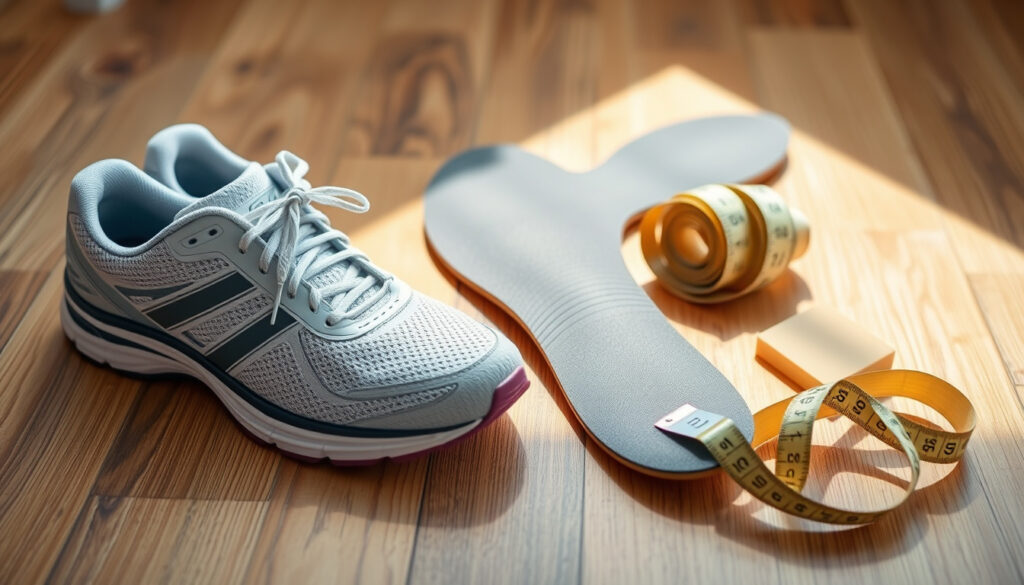
Shoes Insoles Guide: Benefits, Risks, and Expert Recommendations
Anyone who has spent a long day on their feet knows the difference between shoes that feel right and those that don’t. That difference often comes down to what’s inside the shoe. This guide cuts through the marketing to help you match the right insole to your specific foot condition and activity level, whether you’re dealing with flat feet, Achilles tendonitis, or just want more comfortable walks.
Adults who experience foot pain: 77% (APMA survey) ·
Average cost of custom orthotics: $200–$800 (APMA) ·
Global insole market value (2023): $3.2 billion (Grand View Research)
Quick snapshot
- Insoles can relieve pain for many foot conditions like plantar fasciitis and metatarsalgia (Mayo Clinic (leading medical research institution))
- Custom orthotics are effective for structural foot deformities (American Podiatric Medical Association (national professional body))
- Ill-fitting insoles may cause discomfort or new pain (NHS (UK public health authority))
- Whether insoles prevent all types of foot injuries (PubMed Central (peer-reviewed biomechanics research))
- Optimal insole material for every activity (NCBI Bookshelf (medical literature database))
- Long-term effects of daily insole use without professional guidance (PubMed Central (randomized trial on orthoses))
- No timeline data applicable for this guide topic
- Growing demand for personalized, activity-specific insoles (Grand View Research (market analysis firm))
- More clinical trials needed to standardize prescription guidelines (PubMed Central (trial on Achilles tendinopathy))
| Label | Value |
|---|---|
| Definition | A removable insert placed inside a shoe for comfort, fit, or medical support |
| Common materials | Memory foam, gel, EVA foam, cork, leather |
| Average lifespan | 6–12 months depending on usage and material |
| Primary uses | Arch support, cushioning, odor control, correction of minor foot issues |
Is it good to put insoles in shoes?
Benefits of using insoles
- Insoles can redistribute pressure and reduce pain, particularly for conditions like plantar fasciitis (Mayo Clinic (leading medical research institution))
- They provide arch support and cushioning, which can reduce foot fatigue during long periods of standing or walking (American Podiatric Medical Association (national professional body))
- May improve foot alignment and help prevent overpronation, reducing strain on the Achilles tendon (PubMed Central (peer-reviewed biomechanics research))
When you should consider using insoles
- If you experience persistent foot pain during or after walking or running
- If you have flat feet or high arches that cause discomfort in standard shoes
- If over-the-counter insoles have not provided lasting relief after several weeks of consistent use, custom orthotics may be a strong option (Achilles Foot & Ankle (podiatry practice))
For the average walker, a well-chosen over-the-counter insole is a low-risk, high-reward first step. The catch: if you have a structural foot issue, guessing wrong on material or arch height can turn a solution into a new problem.
The implication: insoles are not a universal fix. They work best when matched to a specific foot condition and activity level, not bought on impulse from a drugstore rack.
What is the difference between shoe inserts and shoe insoles?
Key differences: purpose, material, customization
Three key differences, one pattern: inserts are built for correction, insoles for comfort.
| Feature | Shoe Insoles | Shoe Inserts (Orthotics) |
|---|---|---|
| Primary purpose | Cushioning, comfort, odor control | Biomechanical correction, pain relief |
| Thickness | Thin (2–5 mm typically) | Thicker (5–15 mm, can be built up) |
| Customization | Mass-produced, one-size-fits-most | Can be custom-molded by a podiatrist |
| Material | Foam, gel, fabric | Polypropylene, EVA, cork, rigid shells |
| Cost | $10–$50 | $200–$800 (custom) |
| Replaceable | Yes, every 3–6 months | Yes, but lasts 1–5 years |
Over-the-counter vs prescription orthotics
- Over-the-counter (OTC) insoles are widely available and suitable for mild discomfort or general support
- Custom orthotics are prescribed by a podiatrist for specific structural issues like flat feet, high arches, or leg length discrepancy (American Podiatric Medical Association (national professional body))
- Customised foot orthoses have been studied in randomized trials for Achilles tendinopathy, though researchers noted there were no empirically proven guidelines for prescribing them at that time (PubMed Central (randomized trial on orthoses))
Custom orthotics cost 10–20 times more than OTC insoles. For a casual walker with no structural deformity, that premium rarely pays off. For someone with flat feet and chronic Achilles pain, the biomechanical precision can be worth every dollar.
What this means: the choice between insoles and inserts comes down to whether you need comfort or correction. If your foot pain is mild and occasional, start with OTC. If it’s persistent and linked to a structural issue, see a podiatrist.
What are the best insoles for Achilles tendonitis?
Types of insoles recommended for Achilles tendonitis
- Insoles with a heel lift in the 8 to 12 mm range can reduce strain on the Achilles tendon by moving the heel away from the back of the shoe (Upstep (orthotic provider))
- Arch support is repeatedly identified as a key feature to look for in insoles for Achilles tendonitis (SOLE (insole manufacturer))
- Foot orthoses can reduce Achilles tendon load during running in flat-footed runners, suggesting a biomechanical rationale for use in people with flat feet (PubMed Central (peer-reviewed biomechanics research))
- Orthotic insoles may help prevent over-pronation, which can reduce strain on the Achilles tendon (Footlogics Australia (podiatry product supplier))
Shoes to avoid with Achilles tendonitis
- Flat shoes like ballet flats, flip-flops, and minimalist sneakers that offer no heel lift
- High heels that shorten the Achilles tendon and may worsen the condition over time
- Shoes with inadequate heel cup depth that allow the heel to slip and cause friction
What worsens Achilles tendonitis
- Sudden increase in activity intensity or duration without proper conditioning
- Wearing worn-out shoes that have lost their cushioning and support
- Overpronation that places excessive strain on the Achilles tendon (Footlogics Australia (podiatry product supplier))
- People with flat feet are more likely to develop Achilles tendonitis according to multiple clinical and commercial podiatry sources (Upstep (orthotic provider))
Achilles tendonitis patients face a paradox: the right insole can reduce pain, but the wrong one — especially one that flattens the arch or lacks a heel lift — can increase tendon strain and delay healing.
What are the disadvantages of insoles?
Potential side effects
- Improperly fitted insoles can cause new pain or discomfort, especially if they alter foot biomechanics too abruptly (NHS (UK public health authority))
- They may require an adjustment period of 1–2 weeks during which some users experience mild soreness
- Some insoles are not breathable and cause excessive sweating, leading to odor or skin irritation
Common issues with ill-fitting insoles
- Insoles that are too thick can make shoes feel tight and cause pressure points
- Insoles that lack proper arch support can worsen conditions like plantar fasciitis
- Cheap insoles may compress quickly, losing their cushioning effect within weeks
The same feature that makes insoles helpful — altering foot mechanics — is also what makes them risky when chosen poorly. A $15 drugstore insole for a $150 foot problem is a false economy.
Why this matters: the disadvantages of insoles are almost always tied to poor fit or wrong type. A podiatrist can help you avoid these pitfalls, but many people skip that step and end up with more pain than they started with.
Do podiatrists recommend insoles?
The 3 shoe rule for foot health
- Podiatrists often recommend rotating between three pairs of shoes to allow each pair to fully dry and decompress between wears
- This practice can extend the life of both shoes and insoles, and reduce the risk of fungal infections
- The 3 shoe rule is particularly relevant for people who wear insoles, as the insole also needs time to recover its shape
When podiatrists prescribe custom orthotics
- Custom orthotics are recommended for structural foot issues like flat feet, high arches, or leg length discrepancy (American Podiatric Medical Association (national professional body))
- They are also prescribed when over-the-counter insoles have not provided relief after several weeks of consistent use (Achilles Foot & Ankle (podiatry practice))
- Customised foot orthoses were studied in a randomized trial for Achilles tendinopathy, using neutral suspension casting and a modified Root-style orthotic design with polypropylene shell material and EVA rearfoot posting material (PubMed Central (randomized trial on orthoses))
“Custom orthotics can be prescribed to treat specific foot conditions and improve foot function.”
— American Podiatric Medical Association (national professional body)
“Shoe inserts may help redistribute pressure and reduce pain in conditions like plantar fasciitis.”
— Mayo Clinic (leading medical research institution)
The trade-off: podiatrists recommend insoles when the benefit of biomechanical correction outweighs the cost and adjustment period. For most people with mild discomfort, OTC insoles are a reasonable first step. For those with structural issues, a podiatrist’s prescription is the safer path.
Related reading: **Skechers Sandals 2025: Women’s, Men’s & Kids’ Comfort Guide** · **UGG Slippers Ireland: Where to Buy, Compare Models & Care Guide**
walkfulton.com, stridesoles.com, premierfoot.com, achillesfootandankle.com, nmfootandankle.com, norgehotell.com
For a comprehensive overview of how insoles can help or hinder foot health, refer to our detailed guide on insoles.
Frequently asked questions
How long do shoe insoles last?
Most insoles last 6–12 months depending on usage frequency, activity level, and material. Gel and foam insoles compress faster than cork or rigid orthotics. Replace them when you notice visible wear or reduced cushioning.
Can you wash shoe insoles?
Yes, but check the manufacturer’s instructions. Most foam and gel insoles can be hand-washed with mild soap and air-dried. Avoid machine washing or direct heat, which can deform the material.
Are gel insoles better than foam?
Gel insoles excel at shock absorption and are ideal for high-impact activities like running. Foam insoles offer better arch support and are more breathable. The best choice depends on your primary activity and foot shape.
Do insoles help with back pain?
Yes, for some people. Insoles that improve foot alignment can reduce stress on the knees, hips, and lower back. However, back pain has many causes, and insoles are not a guaranteed solution for all types.
Can I use insoles in any shoe?
Most insoles fit standard lace-up shoes, sneakers, and boots. They may not fit sandals, high heels, or very narrow shoes. Always check that the insole fits snugly without bunching at the toes or heel.
What size insole should I buy?
Most insoles are sold by shoe size and can be trimmed to fit. Place the insole on top of your shoe’s existing insole to check alignment. Trim only the toe area if needed, never the heel or arch.
Are custom orthotics worth the cost?
For people with structural foot issues or chronic pain that hasn’t responded to OTC insoles, custom orthotics can be a worthwhile investment. For mild discomfort, OTC insoles are usually sufficient at a fraction of the cost.
For anyone dealing with foot pain, the choice between a $20 insole and a $400 custom orthotic is not about price — it’s about precision. If your foot is structurally sound and your pain is mild, start with OTC. If you have flat feet, Achilles tendonitis, or pain that persists for weeks, see a podiatrist. The wrong insole can cost you more than money — it can cost you months of recovery time.
More related posts
 What Network Does Smarty Use – VodafoneThree Coverage Guide
 Best Pastelon Near Me: Top CT Local Spots & Delivery
 Kelly Hoppen Net Worth, Age, Relationships & Career Facts
 Coventry City F.C. Standings – Top of 2025/26 Championship
 Rock and Sole Plaice – London’s Oldest Fish and Chip Shop
 Best Clothing Stores in Ireland: Dublin, Galway & Online
 Karen Fukuhara: Biography, The Boys Salary & Voice Facts
 Keri Russell: Life, Career, and Relationship with Matthew Rhys