Minnie Mouse: Real Name, Gender, Why She Never Married
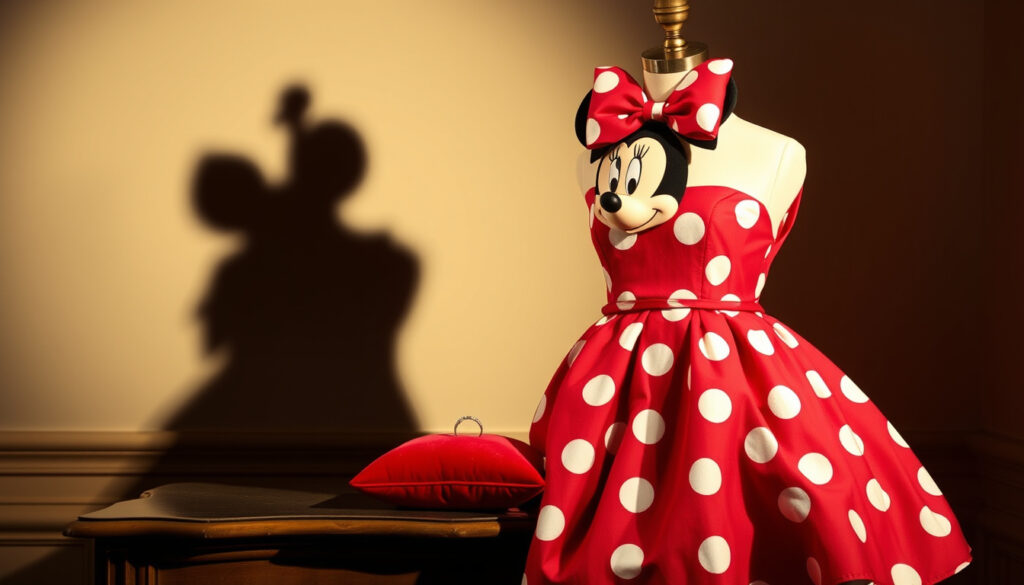
Ask anyone to picture Minnie Mouse and the image snaps into focus instantly: a floppy red bow, a polka-dotted dress, and a sweet smile that has been part of pop culture for nearly a century. But behind that iconic silhouette lies a surprisingly tangled backstory involving a rumored real name, a long-unanswered question about marriage, and even a rival mouse named Mortimer.
First appearance: 1928 in Steamboat Willie ·
Creator: Walt Disney ·
Species: Anthropomorphic mouse ·
Signature colors: Red bow, blue/red polka-dotted dress ·
Number of classic cartoons with Mickey: 74
Quick snapshot
- Real name: Minnie Mouse (Minerva in some sources) (Mental Floss (pop-culture fact archive))
- Debut: 1928 (D23 (official Disney fan club))
- Creator: Walt Disney (Wikipedia (community encyclopedia))
- Polka-dotted dress (often red or blue) (D23 (official Disney fan club))
- Large bow (red is signature) (D23 (official Disney fan club))
- White gloves and high heels (D23 (official Disney fan club))
- Longtime girlfriend of Mickey Mouse (D23 (official Disney fan club))
- Ex-boyfriend: Mortimer Mouse (Wikipedia (community encyclopedia))
- Friends with Daisy Duck, Clarabelle Cow (D23 (official Disney fan club))
- Icon of Disney fashion and merchandise (The Walt Disney Family Museum (Disney history institution))
- One of the first female cartoon stars (Georgia Southern University (gender studies research))
- Influenced later Disney princesses (The Walt Disney Family Museum (Disney history institution))
Six key facts tell the core story of Minnie Mouse at a glance.
| Attribute | Value |
|---|---|
| Full name | Minnie Mouse (sometimes Minerva) (Mental Floss (pop-culture fact archive)) |
| First appearance | Steamboat Willie (1928) (D23 (official Disney fan club)) |
| Species | Anthropomorphic mouse (D23 (official Disney fan club)) |
| Gender | Female (Georgia Southern University (gender studies research)) |
| Relationship status | Girlfriend of Mickey Mouse (not married) (D23 (official Disney fan club)) |
| Number of golden-age cartoons | 74 with Mickey and Pluto (D23 (official Disney fan club)) |
What is Minnie Mouse’s real name?
Minnie as a stage name
- From her first appearance in 1928, the character has been credited simply as Minnie Mouse. But a persistent piece of Disney lore holds that her full first name is Minerva. The earliest printed reference to “Minerva Mouse” comes from a 1942 comic strip called “The Gleam,” according to Mental Floss (pop-culture fact archive).
- Walt Disney himself never used the name Minerva in interviews or publicity materials. The D23 fan club lists her official name as Minnie Mouse with no surname (D23 (official Disney fan club)).
Full name in official media
- Disney’s own legal and trademark documents refer to the character solely as “Minnie Mouse.” The “Minerva” tag appears almost exclusively in informal fan circles and secondary retellings of the strip story (Disney Wiki (Fandom – community database)).
- When asked about a full name, Disney representatives have no canonical answer. The implication: Minerva remains an affectionate invention, not an official middle name.
The implication: Minnie’s naming ambiguity is a deliberate brand choice that allows Disney to maintain flexibility while satisfying trivia collectors with the Minerva footnote.
Why doesn’t Mickey marry Minnie?
Walt Disney’s reasoning
- Walt Disney addressed the question directly in 1933, telling journalists that “in private life, Mickey is married to Minnie,” as reported by Mental Floss (pop-culture fact archive). Yet the studio never animated or published a wedding ceremony.
- Decades later, Walt added a more philosophical reason: “There is no marriage in the land of make-believe,” according to the same source. He wanted the characters to remain eternally youthful and available for new stories.
Fan theories and official stance
- Some fans speculate that a wedding would remove the “will they/won’t they” tension that keeps the relationship light and marketable. AllEars.net (Disney fan news site) notes that no canonical marriage exists in any Disney film, comic, or theme-park show.
- The Walt Disney Family Museum observes that keeping the couple unmarried preserves a perpetual courtship that can be merchandised year after year (The Walt Disney Family Museum (Disney history institution)).
The pattern: Disney prioritizes perpetual storytelling potential over romantic resolution, keeping the couple forever young and forever dating.
What kind of animal is Minnie?
Anthropomorphic mouse
- Minnie is an anthropomorphic mouse, meaning she walks upright, wears human clothes, speaks, and expresses emotion. D23 (official Disney fan club) categorizes her as an anthropomorphic mouse, identical in species to Mickey.
- Her physical traits – round ears, a long tail, whiskers – align with a generic cartoon mouse design, not a specific biological subspecies.
Comparison to real mice
- Real house mice (Mus musculus) are small, nocturnal, and quadrupedal. Minnie’s bipedalism and wardrobe are pure fantasy. Disney Wiki (Fandom – community database) notes that the character was never intended to represent a realistic mouse.
- The anthropomorphism allows her to serve as a relatable comic figure, not a science lesson – a design choice that has held since 1928.
What is Minnie Mouse’s gender?
Female character designation
- Minnie is explicitly female. Her gender is established through traditionally feminine clothing (dress, bow, high heels), a high-pitched voice, and her role as Mickey’s girlfriend. Walt Disney voiced her in early shorts with a squeaky falsetto, confirming her female identity (D23 (official Disney fan club)).
- Scholarship from Georgia Southern University (gender studies research) describes her as a “gendered icon” whose femininity was deliberately amplified to contrast with Mickey’s neutral “everyman” design.
Gendered traits in early animation
- In the 1920s and 1930s, female cartoon characters were rare. Minnie’s eyelashes, slim waist, and soft voice set her apart from Mickey’s rounder, more gender-neutral silhouette. The Walt Disney Family Museum (Disney history institution) notes she was one of the first female stars in animation.
- A 2023 article from Inside the Magic (unofficial Disney news) claimed that a modern promotional image introduced a “gender-fluid” interpretation of Minnie, but this is not supported by any Disney official statement and is widely regarded by fans as a misinterpretation of a fantasy outfit.
Who is Minnie’s ex-boyfriend?
Mortimer Mouse
- In the 1931 short “The Barnyard Battle,” a character named Mortimer Mouse appears as a rival for Minnie’s affections. He is depicted as a slick-talking, mustachioed mouse who tries to win Minnie away from Mickey (Wikipedia (community encyclopedia)).
- Mortimer later became the original name for what we now know as Mickey Mouse – Walt Disney’s wife reportedly objected that “Mortimer” sounded too pompous. The name was recycled for this one-time antagonist.
Other potential suitors
- No other canonical ex-boyfriends exist. Some comic-strip gags have featured unnamed mice making passes at Minnie, but Mortimer is the only named rival in official Disney animation.
- Disney’s Fab Five (Mickey, Minnie, Donald, Daisy, Goofy) is a stable group; romantic tension is almost exclusively between Mickey and Minnie.
Timeline: Minnie Mouse through the decades
- 1928 – Minnie Mouse debuts in Steamboat Willie (D23)
- 1929 – First solo appearance in The Karnival Kid (The Walt Disney Family Museum)
- 1930s-1940s – Regular appearances in Mickey Mouse cartoons, 74 total with Mickey and Pluto (D23)
- 1952 – Last theatrical short of the golden age: Pluto’s Christmas Tree (The Walt Disney Family Museum)
- 1955-1980s – Transition to television and theme parks
- 1983 – Return to animation in Mickey’s Christmas Carol (The Walt Disney Family Museum)
- 1986 – The Disney Company declares 1986 as Minnie’s year (The Walt Disney Family Museum)
- 1990s – Minnie becomes a key merchandising brand
- 2011-2017 – Minnie’s Bow-Toons series on Disney Junior
Confirmed facts vs. what’s unclear
Confirmed facts
- Minnie Mouse first appeared in 1928 (D23)
- She is an anthropomorphic mouse (D23)
- She is Mickey Mouse’s girlfriend (D23)
- Her signature attire includes a red bow and polka-dotted dress (D23)
What’s unclear
- Whether “Minerva” is an official middle name or a fan invention from a 1942 comic strip (Mental Floss)
- The exact reason Walt Disney decided not to have them marry on screen, beyond the quoted “no marriage in make-believe” (Mental Floss)
- Whether Mortimer Mouse qualifies as a canonical “ex-boyfriend” or simply a one-time rival from a single 1931 short (Wikipedia)
- Whether the Inside the Magic article about a gender-fluid Minnie interpretation has any basis in official Disney statements (Inside the Magic)
Voices from the Disney vault
“In private life, Mickey is married to Minnie.”
— Walt Disney, 1933, as recounted by Mental Floss (pop-culture fact archive)
“Minnie’s debut as a flapper-style sweetheart established her as one of the first female stars of animation.”
— D23 (official Disney fan club), Minnie Mouse character entry
“There is no marriage in the land of make-believe.”
— Walt Disney, later interview, via Mental Floss (pop-culture fact archive)
Minnie Mouse broke out of the girlfriend box decades ago. She now carries her own merchandising empire, a dedicated Disney Junior series, and a fashion identity that rivals any human celebrity. The unanswered questions – Minerva, the missing wedding – only add to her legend.
Minnie Mouse is simultaneously the most famous girlfriend in cartoon history and a character who has never been defined solely by that role. Disney built a merchandising empire on her fashion-driven identity – the bow, the dots – that sells more products than any wedding ring ever could.
Disney has steadily expanded Minnie’s solo presence since the 2010s. If the trend holds, a theatrical feature – her first – could finally arrive within the next decade.
For Disney fans and casual readers alike, the Minnie Mouse story is a masterclass in how a silent-era cartoon mouse can stay relevant for nearly a century. The company’s decision to keep her and Mickey unmarried may puzzle romantics, but it has kept the door open for endless storytelling. Disney’s lesson for any brand: give her a distinctive look, a grounded personality, and never close the story.
en.wikipedia.org, thedisneyclassics.com, reddit.com, youtube.com, przegladmedia.pl
Fans curious about her personal life often turn to a detailed breakdown of her real name and relationship history for further insight.
Frequently asked questions
What is Minnie Mouse’s signature color?
Red. Her bow is most often red, and her polka-dotted dress is frequently red or blue with white dots (D23).
Does Minnie Mouse have a last name?
No official last name. She is universally known as Minnie Mouse, with “Mouse” functioning as both species and surname (D23).
How many times has Minnie appeared in cartoons?
She appeared in 74 cartoons with Mickey and Pluto during the golden age, plus numerous later shorts, TV series, and cameos (D23).
What is Minnie Mouse’s relationship with Daisy Duck?
They are close friends. Both are part of the extended Disney gang and often appear together in group scenes (D23).
Who voiced Minnie Mouse originally?
Walt Disney himself voiced Minnie in the earliest shorts. Marcellite Garner took over in the early 1930s, and Russi Taylor was the voice from 1986 until 2019 (D23).
What is the difference between Minnie and Mickey’s design?
Minnie has eyelashes, a thinner build, a bow, a dress, and high heels. Mickey is rounder, wears shorts, and has no eyelashes. Their ears are identical (D23).
Is Minnie Mouse a princess?
No. Disney does not classify Minnie as a Disney Princess because she is an animal character and predates the princess franchise. She belongs to the “Fab Five” group (The Walt Disney Family Museum).
Related reading: Mr. Krabs Character Analysis · Crash Bandicoot: Character, Games, and Answers to Top Questions
More related posts
 Nancy Wheeler: Character Guide, Relationships & Behind the Scenes
 Tony Pitts: Biography, Career, and Personal Life
 Anne-Marie Duff: Nationality, Age, Children, and James McAvoy
 Vince Vaughn: Career, Feuds, and Disability Updates
 Elliot Page: Gender, Transition, Partner, and Identity
 New Christmas Movies 2025: Full Guide to Streaming & Theatrical
 Emma Watson: Life, Career Move, and Activism
 Houses for Sale Perth: Prices, Suburbs & Buyer Guide