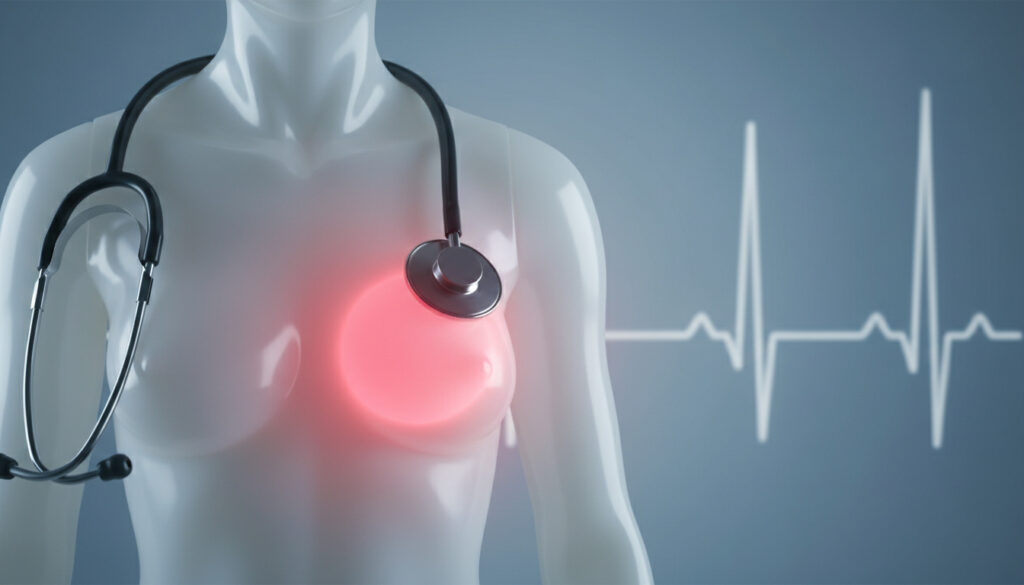
Female Pain in Middle of Chest – Causes and When Serious
Middle chest pain in women demands immediate attention, yet recognizing whether symptoms signal a life-threatening cardiac event or a benign condition remains clinically challenging. Research consistently shows that female cardiac presentations differ significantly from male patterns, with women experiencing higher mortality rates following heart attacks due to delayed recognition and atypical symptom profiles.
Pressure, tightness, or discomfort centered in the chest affects women across all age groups, stemming from diverse origins including coronary artery disease, gastroesophageal reflux, anxiety disorders, and musculoskeletal inflammation. Understanding these distinct pathways enables more informed health decisions and faster access to appropriate medical intervention.
Medical literature emphasizes that women frequently report subtler warning signs than the classic “crushing” chest pain depicted in popular media. Fatigue, nausea, and radiating discomfort to the jaw or back may overshadow central chest sensations, complicating self-assessment and initial clinical evaluation.
What Causes Middle Chest Pain in Women?
Heart attack and angina present as pressure, squeezing, or fullness in the center of the chest, often accompanied by atypical symptoms in women.
GERD and acid reflux produce burning sensations or pressure that mimic cardiac pain, particularly after meals.
Anxiety and panic attacks generate chest tightness, shortness of breath, and pressure that can feel indistinguishable from heart-related pain.
Costochondritis and chest wall injuries create localized, reproducible pain worsened by movement or deep breathing.
- Women experience heart attacks without severe artery blockages more frequently than men, including nonobstructive coronary artery disease and microvascular dysfunction.
- Approximately 24% of women presenting to emergency departments with chest pain have underlying coronary artery disease.
- Female patients face significantly higher post-event mortality: 26% die within one year versus 19% of male patients.
- Atypical presentations often lead to delayed diagnosis, with women more likely to dismiss symptoms as stress or indigestion.
- Risk factors include early menopause, polycystic ovary syndrome, and pregnancy complications such as preeclampsia.
| Symptom Pattern | Likely Origin | Urgency Level |
|---|---|---|
| Pressure, squeezing, fullness in center | Cardiac (angina/heart attack) | High |
| Burning sensation after meals | GERD/Heartburn | Low |
| Sharp pain worsening with movement | Costochondritis/Musculoskeletal | Low |
| Tightness with hyperventilation | Anxiety/Panic | Moderate |
| Pain radiating to jaw, back, or arm | Cardiac | High |
| Localized tenderness on palpation | Muscular injury | Low |
Is Middle Chest Pain a Sign of Heart Attack in Females?
Central chest discomfort remains the most common heart attack symptom among women, though it frequently manifests differently than in men. Women often describe pressure, squeezing, fullness, or tightness rather than acute stabbing pain. These sensations may persist for several minutes, disappear and return, or flare during rest, sleep, or emotional stress.
Recognizing Cardiac Symptoms in Women
Beyond central chest pressure, women frequently experience accompanying symptoms that complicate diagnosis. Nausea, vomiting, cold sweat, lightheadedness, and unusual fatigue commonly occur alongside chest discomfort. Pain may radiate to the back, neck, jaw, stomach, or either arm, with some patients reporting indigestion-like sensations more prominent than chest pain itself.
When Pain Occurs Without Blockage
Women develop heart attacks through mechanisms distinct from obstructive coronary artery disease. Microvascular dysfunction, vasospastic disorders, and impaired arterial relaxation can produce ischemic symptoms without the severe plaque buildup typically visible on angiograms. These conditions, including nonobstructive coronary artery disease, occur more prevalently in female populations and require specialized diagnostic approaches.
The American Heart Association advises women to explicitly use the term “chest pain” when describing symptoms to healthcare providers. Descriptions limited to “discomfort” or “tightness” may be overlooked amid other complaints, delaying critical intervention.
How to Differentiate Heartburn from Serious Chest Pain in Women
Gastroesophageal reflux disease and esophageal spasms generate burning or pressure sensations that closely mimic cardiac pain, creating diagnostic confusion. Unlike heart-related pain, GERD symptoms typically intensify when lying down or after consuming large meals, often accompanied by a sour taste or regurgitation.
GERD vs. Cardiac Pain
Cardiac pain generally relates to exertion or stress rather than body position, whereas reflux discomfort improves when standing upright. However, Yale New Haven Health System specialists caution that these patterns overlap significantly in women, necessitating medical evaluation rather than self-diagnosis.
Key Timing and Trigger Differences
Angina often follows physical activity or emotional distress, while GERD pain correlates with dietary intake. Mass General Brigham clinicians note that esophageal spasms can trigger at rest, further complicating differentiation without electrocardiogram or troponin testing.
Can Anxiety Cause Chest Pain in Women?
Anxiety disorders and panic attacks produce genuine physiological chest symptoms through stress hormone release and hyperventilation. These episodes create tightness, pressure, or aching in the middle chest accompanied by shortness of breath, palpitations, and sweating—mimicking cardiac events closely enough to trigger emergency department visits.
Physiological Response to Panic
During panic episodes, the body releases adrenaline and other stress chemicals that increase heart rate and contract chest wall muscles. This physiological response generates real pain sensations that resolve gradually as the attack subsides, typically within minutes rather than the prolonged discomfort of a heart attack.
Distinguishing Psychological from Physical Pain
Harvard Health specialists emphasize that while anxiety-induced pain often peaks rapidly and accompanies hyperventilation, only clinical assessment including ECG and blood tests can safely exclude cardiac causes. Women with anxiety histories face particular risk of dismissing genuine cardiac symptoms as psychological.
Anxiety-induced chest tightness often accompanies hyperventilation, sweating, and a sense of impending doom. Unlike cardiac pain, these episodes typically peak within minutes and may resolve with calming techniques, though medical evaluation remains necessary to rule out organic causes.
Harvard Health specialists note that dozens of conditions including pancreatitis and pneumonia can mimic cardiac pain. No single test perfectly differentiates causes; comprehensive evaluation requires electrocardiograms, troponin levels, and detailed patient history.
When Should a Woman Seek Emergency Help for Chest Pain?
-
Sudden pressure — Call emergency services if pain begins abruptly during rest or minimal exertion, particularly if accompanied by shortness of breath or nausea. Source: American Heart Association -
Persistent symptoms — Chest discomfort lasting more than a few minutes, or recurring in waves, requires immediate medical assessment. Source: UT Southwestern Medical Center -
Intermittent recurrence — Pain that subsides but returns within hours suggests unstable angina or progressive cardiac events. Source: Baptist Health -
Scheduled evaluation — Even resolved mild symptoms warrant prompt physician consultation within one to two days, particularly for women with diabetes or family history. For ongoing cardiac care, Kent and Canterbury Hospital services provide specialized diagnostic resources. Source: Mayo Clinic
What Do We Know About Central Chest Pain in Women?
Established Facts
- Women experience higher one-year mortality (26%) following heart attack compared to men (19%).
- Central chest pressure remains the most common heart attack symptom across sexes.
- 24% of women presenting to ER with chest pain have confirmed coronary artery disease.
- Nonobstructive coronary artery disease and microvascular dysfunction occur more frequently in women.
Remaining Uncertainties
- Why some women experience cardiac events without any chest discomfort remains incompletely understood.
- The precise hormonal mechanisms linking early menopause or PCOS to cardiac risk require further investigation.
- Optimal protocols for differentiating anxiety-induced pain from microvascular angina in emergency settings vary by institution.
Why Chest Pain Differs in Women
Biological and hormonal factors contribute to atypical cardiac presentations in female patients. Estrogen appears to influence pain perception and vascular function, potentially masking traditional symptom patterns until advanced disease stages. Microvascular dysfunction—impaired relaxation of small arterial vessels—affects women disproportionately, generating ischemic symptoms without the obstructive plaque buildup typically seen in angiograms.
Societal factors compound these physiological differences. Women historically undergo less aggressive diagnostic testing for chest pain and are more likely to attribute symptoms to stress or aging. This diagnostic gap, combined with conditions like preeclampsia or gestational diabetes that elevate long-term cardiovascular risk, creates distinct clinical trajectories requiring sex-specific assessment protocols.
What Do Medical Authorities Say About Female Chest Pain?
Women may feel fatigue over classic pain. Subtle symptoms including brief neck or back discomfort often prove more noticeable than central chest sensations themselves.
— American Heart Association and Mayo Clinic
Not-so-obvious complaints such as nausea or unusual fatigue frequently mimic indigestion, leading to dangerous delays in seeking emergency care.
— Duke Health Cardiology Specialists
Key Takeaways on Middle Chest Pain in Women
Middle chest pain in women originates from cardiac, gastrointestinal, psychological, and musculoskeletal sources, with female-specific risk factors including pregnancy complications and early menopause elevating cardiac vulnerability. Prompt evaluation remains essential given women’s higher post-event mortality rates and propensity for atypical symptoms. Women experiencing persistent or recurrent central chest discomfort should seek immediate medical consultation regardless of symptom severity, as early intervention significantly improves survival outcomes. Maintaining overall health awareness, including Eyelash recovery and health tips, reflects the importance of attentive self-care across all bodily systems.
Frequently Asked Questions
Can women have heart attacks without chest pain?
Yes, women experience heart attacks without severe chest pain more frequently than men, sometimes presenting only with fatigue, nausea, or back discomfort.
How long should chest pain last before calling emergency services?
Call emergency services if chest discomfort persists longer than a few minutes or comes and goes repeatedly, especially if accompanied by shortness of breath or sweating.
Can anxiety cause chest pain that feels like a heart attack?
Anxiety and panic attacks can produce chest tightness, pressure, and shortness of breath that mimic cardiac pain, though these episodes typically resolve within minutes.
Is middle chest pain serious in females?
Central chest pain can indicate serious conditions including heart attack or angina, though musculoskeletal and gastrointestinal causes are also common; medical evaluation determines urgency.
What does GERD chest pain feel like compared to heart pain?
GERD typically produces burning pain after meals or when lying down, whereas cardiac pain often involves pressure or squeezing unrelated to eating position.
Do women have different heart attack symptoms than men?
Women more commonly experience atypical symptoms such as jaw pain, back discomfort, unusual fatigue, and nausea alongside or instead of classic crushing chest pain.
More related posts
 Chris Pine: Relationships, Nepo Baby Status, Career
 Hugh Dennis: Biography, Career, Net Worth, and Personal Life
 Bon Scott Cause of Death: What Really Happened
 Tony Pitts: Biography, Career, and Personal Life
 Bernie Mac Cause of Death: Sarcoidosis Battle
 Driving School Near Me – California Requirements and Costs
 Nancy Guthrie Missing: Ransom Note Claims She Died
 Check Domain: How to Verify Ownership, Availability & Security