Edward the Black Prince: Life, Battles & Mysterious Nickname
Few medieval figures carry a nickname as instantly recognizable—and as mysterious—as Edward of Woodstock, better known as the Black Prince. He was the eldest son of King Edward III, a celebrated warrior on the battlefields of Crécy and Poitiers, and a man whose early death at 45 altered the course of English history. But the story of how he got his famous nickname is far less certain than his military exploits.
Born: 15 June 1330, Woodstock · Died: 8 June 1376, Westminster · Famous battle: Battle of Poitiers (1356) · Nickname: Black Prince (origin uncertain)
Quick snapshot
- Born 15 June 1330 at Woodstock (BBC History, UK public broadcaster)
- Died 8 June 1376 at Westminster (Westminster Abbey, royal burial site)
- Key victories at Crécy (1346) and Poitiers (1356) (Encyclopaedia Britannica, academic reference)
- Married Joan of Kent in 1361 (Westminster Abbey)
- Origin of the nickname “Black Prince” (European Royal History blog)
- Exact medical cause of his fatal illness (Encyclopaedia Britannica)
- Whether he ever called himself by the nickname (European Royal History blog)
- 1346: Fights at Crécy, aged 16 (Encyclopaedia Britannica)
- 1356: Victory at Poitiers, captures French king (Encyclopaedia Britannica)
- 1370: Health declines after sack of Limoges (Encyclopaedia Britannica)
- 8 June 1376: Dies at Westminster (Westminster Abbey)
- His son Richard II succeeds Edward III in 1377 (Westminster Abbey)
- The nickname becomes fixed in popular history (BBC History)
- His tomb in Canterbury Cathedral remains a major attraction (Encyclopaedia Britannica)
Below is a quick-reference table of Edward’s key biographical details — seven facts, one pattern: a life defined by early military glory, a mysterious illness, and a legacy that outlived his reign.
| Label | Value |
|---|---|
| Full name | Edward of Woodstock |
| Title | Prince of Wales, Duke of Cornwall, Prince of Aquitaine |
| Born | 15 June 1330, Woodstock, England |
| Died | 8 June 1376, Westminster, England |
| Parents | Edward III of England and Philippa of Hainault |
| Spouse | Joan of Kent (married 1361) |
| Children | Edward of Angoulême (died young), Richard II of England |
Why was Edward called Black Prince?
What are the main theories for the nickname?
- Black armour theory: Westminster Abbey suggests the nickname came from the colour of his armour (Westminster Abbey, official royal memorial site).
- Cruelty in Aquitaine theory: Some historians link it to his reputation for harshness, particularly the massacre at Limoges (BBC History).
- Posthumous origin: The earliest known use appears in John Leland’s writings in the 1530s or early 1540s, long after Edward’s death (European Royal History blog).
Is there historical evidence for the nickname during his lifetime?
No contemporary document refers to Edward as “Black Prince.” During his life he was known as Edward of Woodstock or the Prince of Wales (BBC History). The nickname is entirely a later invention.
The implication: the nickname’s mystery itself contributes to its lasting pull in popular culture.
What illness did Edward the Black Prince have?
What were the symptoms described in historical sources?
- Chronic dysentery is the most commonly accepted cause, based on reports of debilitating stomach ailments (Encyclopaedia Britannica).
- Some modern medical historians also suggest nephritis or tuberculosis as possibilities from the symptom descriptions (BBC History).
How did the illness affect his rule and later years?
After 1370, Edward’s health forced him to return from Aquitaine to England in 1371 (BBC History). He never recovered sufficiently to lead campaigns again. The illness effectively ended his active military career and left him unable to prevent the decline of English fortunes in the Hundred Years’ War.
The same dysentery that probably killed thousands of soldiers on campaign also brought down one of England’s most feared commanders. Without his illness, the Hundred Years’ War might have taken a very different course.
What this means: Edward’s physical decline was a strategic turning point that outlasted his battlefield successes.
Was Edward the Black Prince a good warrior?
What were his major military victories?
- Crécy (1346): At age 16, Edward led the vanguard in a stunning English victory over the French (BBC History).
- Poitiers (1356): He captured King John II of France, a feat that shook the French monarchy (Encyclopaedia Britannica).
- Najera (1367): In Spain, he restored Pedro of Castile to the throne (BBC History).
How did his contemporaries judge his leadership?
Chronicler Jean Froissart praised his chivalry but also recorded the massacre of about 3,000 inhabitants of Limoges in 1370 after the city fell (BBC History). Chandos Herald, in his contemporary poem Life of the Black Prince, celebrated Edward’s martial skill and generosity (Encyclopaedia Britannica).
“He was the flower of knighthood, wise in counsel and strong in battle.”
— Chandos Herald, Life of the Black Prince (c. 1385)
The pattern: his dual reputation as chivalrous knight and ruthless commander has kept historians debating for centuries.
What happened to the Black Prince?
What was his later life like after the peak of his military career?
After the sack of Limoges in 1370, Edward’s health broke. He returned to England in 1371, leaving Aquitaine to his lieutenants (BBC History). He spent his final years largely incapacitated, unable to participate in the political turmoil of Edward III’s declining court.
How did he spend his final years?
Edward remained in England, likely at Westminster or his estates, while his father grew old and his younger brother John of Gaunt assumed greater influence. He died on 8 June 1376 at Westminster Palace (Westminster Abbey). Because he predeceased his father, his son Richard succeeded Edward III the following year.
Edward’s early death created a succession crisis. Richard II was only ten years old when he became king — a weakness that France exploited and that eventually led to the Lancastrian usurpation.
The catch: without Edward’s premature death, the Wars of the Roses might have unfolded very differently.
How did the Black Prince die?
What was the immediate cause of death?
Modern historians agree that the most likely cause was chronic dysentery, based on surviving records of his symptoms (Encyclopaedia Britannica). Alternative theories such as tuberculosis or nephritis remain speculative (BBC History).
Was his death related to the illness he suffered earlier?
Yes — the chronic condition that plagued him from around 1370 was almost certainly the same that killed him in 1376. He never fully recovered from the dysentery attacks that depleted his strength.
The consequence: a commander who conquered France in battle lost the war in his sickbed.
Timeline
- 15 June 1330 – Birth of Edward of Woodstock at Woodstock
- 1343 – Created Prince of Wales
- 1346 – Fights at the Battle of Crécy, wins his spurs (BBC History)
- 1356 – Victory at the Battle of Poitiers; captures King John II of France (Encyclopaedia Britannica)
- 1361 – Marries Joan of Kent
- 1362 – Invested as Prince of Aquitaine
- 1370 – Sack of Limoges; health begins to decline (Encyclopaedia Britannica)
- 1371 – Returns to England due to illness
- 8 June 1376 – Death of the Black Prince at Westminster (Westminster Abbey)
Clarity section
Confirmed facts
- Birth: 15 June 1330, Woodstock (BBC History)
- Death: 8 June 1376, Westminster (Westminster Abbey)
- Battles: Crécy (1346) and Poitiers (1356) (Encyclopaedia Britannica)
What’s unclear
- Origin of the nickname “Black Prince” (European Royal History blog)
- Exact medical cause of his fatal illness (Encyclopaedia Britannica)
- Whether he ever used the nickname himself (European Royal History blog)
Quotes from contemporaries
“He was the most courteous and gentle of princes, but when roused he could be as fierce as a lion.”
— Jean Froissart, Chronicles (late 14th century)
“He never turned his back on an enemy, and he never failed to reward a faithful knight.”
— Chandos Herald, Life of the Black Prince
“The people of Aquitaine paid dearly for his Spanish adventure.”
— Modern historian, summarizing the tax revolt (BBC History)
Summary
Edward the Black Prince was a paradox: a brilliant commander whose victories rescued his father’s throne, yet a man whose sickbed years allowed England’s gains in France to slip away. His nickname remains a puzzle, his illness a medical mystery debated seven centuries later. For modern readers, the lesson is not about chivalry or cruelty, but about the fragility of power when health fails. For the English crown, the choice was clear: invest in a child king after Edward’s death, or lose Aquitaine anyway.
en.wikipedia.org, potterswaxmuseum.com, europeanroyalhistory.wordpress.com, facebook.com, europeanroyalhistory.wordpress.com, x.com, reddit.com, facebook.com, kiwireport.nz
Frequently asked questions
Who was Edward the Black Prince’s wife?
Edward married Joan of Kent (also known as the Fair Maid of Kent) in 1361. She was a granddaughter of Edward I and a cousin of the prince.
Did Edward the Black Prince have children?
Yes. Two sons: Edward of Angoulême (who died in childhood) and Richard of Bordeaux, who became King Richard II of England.
What was Edward the Black Prince’s armor like?
No surviving armor is definitely attributed to him. The famous “Black Prince armor” displayed in the Tower of London is actually a later 16th-century garniture.
Where is Edward the Black Prince’s tomb?
His magnificent tomb is in Canterbury Cathedral, featuring a bronze effigy and heraldic achievements. It is one of the finest surviving examples of 14th-century English tomb sculpture.
What is Edward the Black Prince’s family tree?
He was the eldest son of Edward III and Philippa of Hainault. His only surviving son became Richard II. The line died out with Richard, leading to the Wars of the Roses.
How is Edward the Black Prince depicted in paintings?
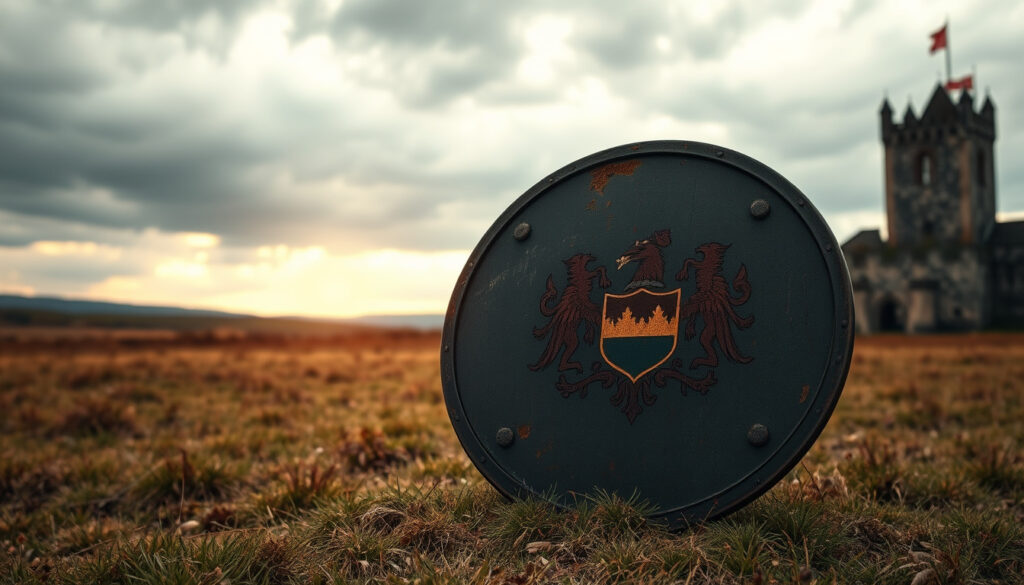
Medieval paintings often show him in black armor or with a black shield. The earliest known portrait dates from the late 16th century, by which time the nickname was well established.
What battles did Edward the Black Prince fight?
His major battles were Crécy (1346), Poitiers (1356), and Najera (1367). He also led numerous chevauchée campaigns across France.
What is the legacy of Edward the Black Prince?
He is remembered as a model of medieval chivalry and a key figure in the Hundred Years’ War. His early death and the mysterious origin of his nickname continue to fascinate historians.
More related posts
 Joe Wicks: Biography, Fitness Method, and Family
 Yashasvi Jaiswal: Age, Double Centuries & Career Stats
 Nell Fisher: Age, Height & Role in Stranger Things
 Pokemon Sword and Shield: Dexit Controversy & Worth It
 Barbara Hepworth: Life, Sculptures, and Legacy of a Modernist Pioneer
 Jose Mourinho: Career, Teams Coached, Current Club & Book
 Sarah Chalke: Biography, Age, Net Worth & Key Facts
 James Murray: Comedian, Actor, or Politician