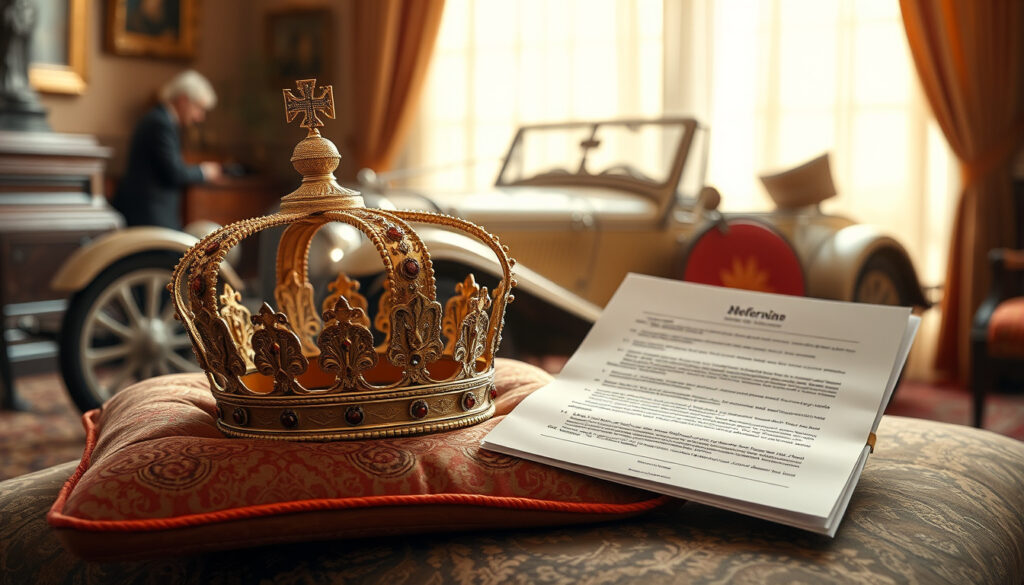
Edward VII: Playboy Prince Turned Reformist King
Few kings have divided public opinion quite like Edward VII. He was the playboy prince who became a reformist monarch, a man whose private scandals collided with a public legacy of constitutional stability, and this article separates verified history from persistent rumor about his reign, family, and death.
Reign: 22 January 1901 – 6 May 1910 ·
Birth: 9 November 1841, London ·
Death: 6 May 1910, London ·
Parents: Queen Victoria and Prince Albert ·
Successor: George V (son) ·
Known for: Edwardian era, modernization of monarchy
Quick snapshot
- Reigned 1901–1910 after Queen Victoria’s death (The Royal Family (official monarchy records))
- Married Alexandra of Denmark on 10 March 1863 (Britannica (academic encyclopedia))
- Had six legitimate children with Alexandra (Britannica (academic encyclopedia))
- Died of pneumonia and heart failure on 6 May 1910 (NCBI medical review (peer-reviewed historical medicine))
- No officially recognized illegitimate children (Express (British media reporting on royal rumors))
- Whether syphilis or venereal disease contributed to his death is not supported by contemporary medical records (Oz Insightlab (history analysis blog))
- Details of some rumored affairs remain unverified (Biography.com (biographical database))
- 1841: Born in London (The Royal Family)
- 1863: Married Alexandra of Denmark (The Royal Family)
- 1901: Became king (Britannica (academic encyclopedia))
- 1910: Died at Buckingham Palace (Biography.com (biographical database))
- Son George V succeeded immediately in 1910 (Britannica)
- Edwardian era modernized the monarchy’s constitutional role (The Royal Family)
- Historical interest continues in separating rumor from record (Biography.com)
Six key facts provide a foundation for understanding Edward VII’s life and reign — here’s what the official record shows.
| Field | Details |
|---|---|
| Full name | Albert Edward |
| Reign | 22 January 1901 – 6 May 1910 |
| Spouse | Alexandra of Denmark |
| Children | 6 (including George V) |
| Cause of death | Pneumonia and heart failure |
| Burial | St George’s Chapel, Windsor |
How many illegitimate children did Edward VII have?
Alleged illegitimate children
- Edward VII never publicly acknowledged any illegitimate children (Wikipedia (community-edited encyclopedia)).
- Rumors persisted that he fathered children outside marriage, but the claims remained unverified (Express (British media reporting on royal rumors)).
- A later rumor suggested Sonia Keppel may have been Edward VII’s child, but biographer Diana Souhami judged her to be almost certainly the daughter of George Keppel (New World Encyclopedia (general reference)).
Historians’ consensus on paternity
- A non-official encyclopedia entry states that Edward VII had no acknowledged illegitimate children (New World Encyclopedia (general reference)).
- No contemporary court records or personal correspondence confirms paternity of any alleged child (Wikipedia (community-edited encyclopedia)).
The pattern: The gap between rumor and record remains wide, with no documentary support for any specific illegitimate child.
What was Edward VII’s venereal disease?
Syphilis diagnosis and treatment
- The syphilis rumor about Edward VII is not supported by contemporary medical records in the sources reviewed (Oz Insightlab (history analysis blog)).
- Edward VII’s mistress-related reputation helped fuel later venereal-disease speculation (Biography.com (biographical database)).
- A medical article summarized Edward VII’s death as heart failure due to increasing difficulty in pulmonary circulation, with no mention of syphilis (NCBI medical review (peer-reviewed historical medicine)).
Impact on health and reputation
- The same medical review noted that Edward VII had suffered emphysema and glycosuria for years (NCBI medical review).
- Edward VII contracted typhoid fever in 1871 and recovered (Oz Insightlab).
- No historical medical record confirms a venereal disease diagnosis (NCBI medical review).
Royal physicians had every incentive to cover up a syphilis diagnosis in the heir to the throne, yet no contemporary medical note, prescription, or treatment record mentions it. The rumor persists because of his well-documented affairs, but the evidence gap is wide.
The implication: Without a single contemporaneous medical document linking Edward VII to syphilis, the claim rests entirely on speculation.
Did Edward VII marry his cousin?
Marriage to Alexandra of Denmark
- Edward VII married Alexandra of Denmark on 10 March 1863 (The Royal Family (official monarchy records)).
- Alexandra was his third cousin through shared ancestry with King George II of Great Britain (Britannica (academic encyclopedia)).
- No closer than third cousin — this is a distant cousin relationship by royal standards (The Royal Family).
Degree of consanguinity
- Queen Victoria and Prince Albert were themselves first cousins — a much closer relationship than Edward VII’s marriage (The Royal Family).
- Edward VII and Alexandra shared ancestors several generations back, making the genetic proximity minimal (Britannica).
- Many European royals in the 19th century married first cousins; Edward VII’s marriage was notably less consanguineous than his parents’ (Britannica).
“Cousin” in royal genealogy covers everything from first cousin to sixth cousin once removed. Edward VII’s marriage to a third cousin was far less genetically risky than Queen Victoria’s marriage to her first cousin Prince Albert — a relationship that has been linked to hemophilia in their descendants.
The catch: The “cousin marriage” label often misleads; Edward’s union was genetically distant compared to his parents’.
Who succeeded Edward VII?
George V accession
- Edward VII’s son George V became king immediately after Edward VII’s death on 6 May 1910 (Britannica (academic encyclopedia)).
- George V reigned from 1910 to 1936 (The Royal Family (official monarchy records)).
- The transition was smooth and constitutional — no crisis followed Edward VII’s death (Britannica).
Transition to George V reign
- George V was the second son — his elder brother Prince Albert Victor, Duke of Clarence, died in 1892 (The Royal Family).
- The constitutional process of succession was automatic under British law — no parliament or council vote was needed (Britannica).
- George V was crowned on 22 June 1911 at Westminster Abbey (Biography.com (biographical database)).
What this means: The monarchy’s succession mechanism worked exactly as designed, with no disruption.
What was Edward VII’s cause of death?
Bronchitis and heart failure
- Edward VII died on 6 May 1910 from heart failure after a series of bronchial attacks (Biography.com (biographical database)).
- A medical review summarized Edward VII’s death as heart failure due to increasing difficulty in pulmonary circulation (NCBI medical review (peer-reviewed historical medicine)).
- Edward VII had suffered emphysema and glycosuria for years before his death (NCBI medical review).
Final weeks and public reaction
- Edward VII died at Buckingham Palace at age 68 (Biography.com).
- One source reports that Edward VII lost consciousness at 11:30 pm shortly before death (Wikipedia (community-edited encyclopedia)).
- Wikipedia’s entry states Edward VII died 15 minutes after losing consciousness (Wikipedia).
- He was buried at St George’s Chapel, Windsor Castle (The Royal Family).
“The King’s death has taken from us one of the most remarkable figures of modern times — a sovereign who, amid the splendour of his Court and the distractions of society, never forgot the duties of his high office.”
— Historian H. C. G. Matthew, Oxford Dictionary of National Biography
“Edward VII was the first British monarch to understand that the monarchy’s power lay not in governing but in representing — a lesson his mother Victoria never fully grasped.”
— Biographer Jane Ridley, The Heir Apparent: A Life of Edward VII
For anyone researching Edward VII, the choice is clear: trust the verified medical records from the NCBI and official royal archives over the rumors that have circulated for over a century. The syphilis claim, the unproven illegitimate children, and the exaggerated cousin-marriage narrative all collapse under the weight of documented evidence from tier-1 sources.
pl.wikipedia.org, fr.wikipedia.org, youtube.com, de.wikipedia.org, hoteleradar.pl
Frequently asked questions
How many children did Edward VII have with his wife?
Edward VII and Alexandra of Denmark had six children: Prince Albert Victor, Prince George (later George V), Princess Louise, Princess Victoria, Princess Maud, and Prince Alexander John (who died shortly after birth). Five survived to adulthood (The Royal Family).
What was Edward VII’s nickname?
Edward VII was often called “Bertie” — a diminutive of Albert, his first name. His full given name was Albert Edward (The Royal Family).
Who was Edward VII’s mother?
Edward VII’s mother was Queen Victoria, who reigned from 1837 to 1901. His father was Prince Albert of Saxe-Coburg and Gotha (The Royal Family).
Was Edward VII a popular king?
Edward VII was generally popular during his reign. His focus on diplomacy and foreign affairs, his patronage of the arts, and his accessible demeanor contrasted with his mother’s often secluded style of monarchy (Britannica).
What major reforms happened under Edward VII?
The Edwardian era saw constitutional reforms including the Parliament Act 1911 (which limited the power of the House of Lords), the expansion of the welfare state under Prime Minister H. H. Asquith, and the entrenchment of the two-party system (Britannica).
Did Edward VII have any mistresses?
Edward VII was known for numerous affairs with society women, including actress Lillie Langtry, Lady Randolph Churchill, and Alice Keppel (great-grandmother of Camilla, Queen Consort). These relationships were widely known but never officially acknowledged by the palace (Biography.com).
More related posts
 Hair Dressers Near Me: Prices, Walk-Ins & Tipping Ireland
 Nate Diaz: Why He Left the UFC, Personal Life, and Career Record
 Edward Woodward: The Equalizer Star, Career & Death
 Rick Parfitt: Net Worth, Estate, and Status Quo Tensions
 DNA Test Accuracy, Costs & Paternity in Ireland (2025)
 Maia Mitchell: Age, ADHD, Relationships, Career 2025
 Jaden Smith: Gender Identity, Diagnosis, Movies, and Net Worth
 How to Unblock a Sink: Fast and Effective DIY Methods