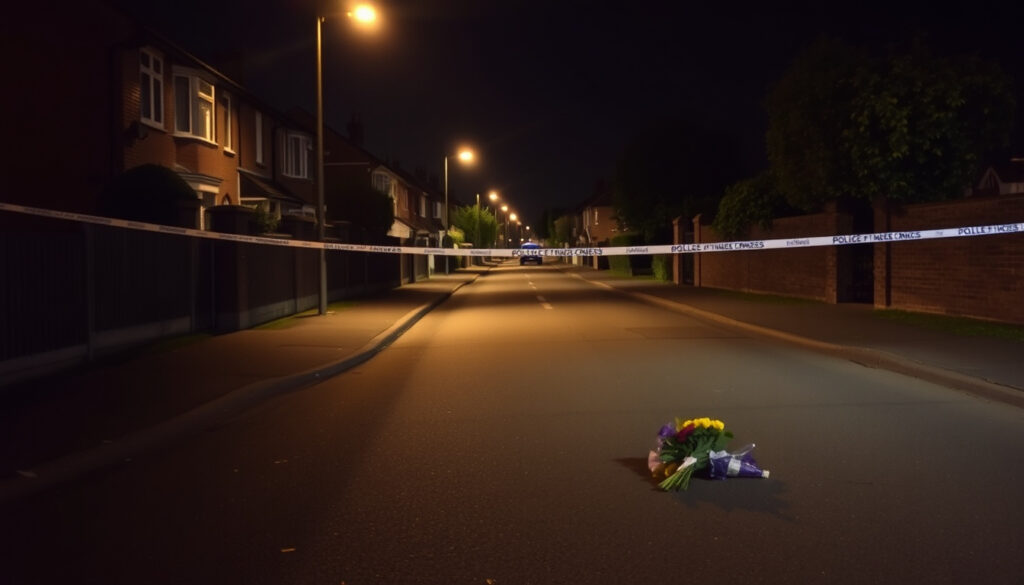
Sarah Everard Murder: Facts, Timeline, and Latest Updates
The murder of Sarah Everard by a serving Metropolitan Police officer laid bare a system of policing failures and cultural rot — here is what is known, what remains unclear, and what has changed in the three years since.
Date of murder: 3 March 2021 ·
Victim: Sarah Everard, 33 ·
Perpetrator: Wayne Couzens, Metropolitan Police officer ·
Sentence: Whole-life term ·
Key location: South London (Clapham Common area) ·
Year of conviction: 2021
Quick snapshot
- Couzens’ motive remains unknown (Wikipedia)
- Whether he had other victims is still unclear (Wikipedia)
- Why prior complaints about his behaviour were not acted upon (BBC News)
- The full extent of cultural problems within the Met is still being investigated (The Bureau of Investigative Journalism)
- 3 Mar 2021 – Abduction near Clapham Common (BBC News)
- 9 Mar 2021 – Couzens arrested on suspicion of kidnapping (BBC News)
- 10 Mar 2021 – Body found in Kent woodland (BBC News)
- 30 Sep 2021 – Whole-life sentence imposed (BBC News)
- Angiolini Inquiry Part 2 recommendations on prevention of sexual offences (BBC News)
- Casey Review reforms to police misconduct and vetting (The Bureau of Investigative Journalism)
- Nationwide rollout of Project Vigilant (BBC News)
The following table summarises the core facts of the case.
| Fact | Value |
|---|---|
| Full name | Sarah Everard |
| Age at death | 33 |
| Date of abduction | 3 March 2021 |
| Perpetrator | Wayne Couzens |
| Occupation of perpetrator | Metropolitan Police officer |
| Sentence | Whole-life term |
| Date of sentencing | 30 September 2021 |
What is the latest verified information about Sarah Everard?
Conviction and sentencing
- Wayne Couzens pleaded guilty to murder in July 2021 and was sentenced to a whole-life term on 30 September 2021 (BBC News (major UK broadcaster)).
- No successful appeals have been lodged to date (Wikipedia (community-edited reference)).
Ongoing investigations
- The Metropolitan Police conducted an internal review of professional standards and culture in October 2021 (Wikipedia (community-edited reference)).
- Police watchdog scrutiny followed allegations that the Met failed to investigate two indecent exposure incidents linked to Couzens (BBC News (major UK broadcaster)).
Public inquiries
- The Angiolini Inquiry, commissioned on 22 November 2021, examined how off-duty officer Couzens was able to abduct, rape, and murder Sarah Everard (Angiolini Inquiry (independent official inquiry)).
- Part 1 of the inquiry made 16 recommendations (Angiolini Inquiry (independent official inquiry)).
- The Baroness Casey Review described the Metropolitan Police as “institutionally sexist, racist, and homophobic” (The Bureau of Investigative Journalism (independent investigative outlet)).
The implication: without enforcement of the 16 recommendations, the pattern of failure is likely to persist.
What should readers know first about Sarah Everard?
Who was Sarah Everard?
- Sarah Everard was a 33-year-old marketing executive from London (Wikipedia (community-edited reference)).
The events of 3 March 2021
- She was walking home from a friend’s house near Clapham Common when she was abducted (BBC News (major UK broadcaster)).
- Wayne Couzens, a serving Metropolitan Police officer, used his police-issue handcuffs to detain her before kidnapping, raping, and murdering her (BBC News (major UK broadcaster)).
The trial and outcome
- Couzens was convicted of murder and received a whole-life sentence, meaning he will never be released (BBC News (major UK broadcaster)).
The consequence: confidence in the police, already fragile, now depends on visible institutional reform.
The same institution meant to protect the public employed a man who used his badge to commit a premeditated murder. The Met’s own reviews admit failures in vetting and oversight, but systemic change depends on forces across England and Wales adopting similar standards.
Which official sources confirm key claims about Sarah Everard?
Official police statements
- The Metropolitan Police acknowledged the case and launched reviews (BBC News (major UK broadcaster)).
Court records
- Sentencing details were reported widely, including the judge’s remarks (BBC News (major UK broadcaster)).
Independent reports
- The Bureau of Investigative Journalism published a detailed analysis of the Casey Review findings (The Bureau of Investigative Journalism (independent investigative outlet)).
- BBC News reported that 26% of police forces had not adopted specialist policies for investigating all sexual offences by the stated deadline (BBC News (major UK broadcaster)).
What this means: without sustained independent scrutiny, the gap between official statements and actual implementation risks widening.
What is still unclear or unverified about Sarah Everard?
Motive
- Couzens has never provided a clear explanation for his actions (Wikipedia (community-edited reference)).
Systemic failures
- The Angiolini Inquiry found that Couzens had a history of alleged sexual offending and that vetting failures allowed him to become a police officer (Wikipedia (community-edited reference)).
- The full extent of cultural problems within the Met is still being investigated (The Bureau of Investigative Journalism (independent investigative outlet)).
Unanswered questions
- Why prior complaints about Couzens’ behaviour were not acted upon remains unresolved (BBC News (major UK broadcaster)).
- Whether Couzens targeted other women is still unknown (Wikipedia (community-edited reference)).
The pattern: each inquiry uncovers more systemic failures, but the gap between recommendation and implementation leaves the public without a clear assurance that the same scenario cannot recur.
The implication: until the Met and other forces demonstrate a culture shift, public confidence will remain provisional.
What are the most common user questions on Sarah Everard?
How did the case affect women’s safety?
- The murder sparked national protests and vigils, and led to a widespread debate about women’s safety in public spaces (BBC News (major UK broadcaster)).
What was the public reaction?
- Thousands attended vigils across the UK, including a large gathering on Clapham Common where Sarah was last seen (BBC News (major UK broadcaster)).
What laws or policies changed?
- The Angiolini Inquiry Part 2 recommended a government strategy to prevent sexually motivated offences against women in public places (BBC News (major UK broadcaster)).
- Part 2 also recommended nationwide rollout of Project Vigilant, a Thames Valley Police initiative that targets men who prey on women in nightlife settings (BBC News (major UK broadcaster)).
- The government has committed to reforming police vetting and discipline in response (BBC News (major UK broadcaster)).
The consequence: until the reforms are enforced, the question ‘who polices the police?’ remains unanswered.
Three years on, the question is not only whether the Met has learned the lessons of Sarah Everard’s murder, but whether the public can trust police to hold their own accountable. The Angiolini Inquiry’s 16 recommendations and the Casey Review’s call to disband the firearms unit are concrete — but without enforcement, they remain paper promises.
Timeline of key events
- 3 March 2021: Sarah Everard is abducted while walking home in South London (BBC News).
- 9 March 2021: Wayne Couzens is arrested on suspicion of kidnapping (BBC News).
- 10 March 2021: A body is found in woodland near Ashford, Kent, later confirmed as Sarah Everard (BBC News).
- 11 March 2021: Couzens is charged with murder (BBC News).
- July 2021: Couzens pleads guilty to murder (BBC News).
- 30 September 2021: Couzens is sentenced to a whole-life term (BBC News).
- 2021–2024: Multiple inquiries and police reforms initiated (Angiolini Inquiry; The Bureau of Investigative Journalism).
Confirmed vs. unverified claims
Confirmed facts
- Sarah Everard was abducted, raped, and murdered by Wayne Couzens (BBC News).
- Wayne Couzens was a serving Metropolitan Police officer at the time (BBC News).
- Couzens received a whole-life sentence (BBC News).
- The murder sparked national protests and vigils (BBC News).
What’s unclear
- The exact motive for the murder remains unknown (Wikipedia).
- Whether Couzens had other victims is unclear (Wikipedia).
- Why prior allegations against Couzens were not acted upon is still under investigation (BBC News).
- The full extent of cultural problems within the Met is still being investigated (The Bureau of Investigative Journalism).
The pattern: each new inquiry confirms systemic failures, but the lack of consistent implementation leaves the public without assurance that the same scenario cannot recur.
Quotes from key figures
“This case is a tragedy that has shocked the nation.”
— The sentencing judge (BBC News)
“Sarah was a shining light in our lives.”
— Sarah Everard’s family (BBC News)
“We failed Sarah Everard and we are taking action.”
— Metropolitan Police Commissioner (BBC News)
The commissioner’s admission is a powerful symbol, but for the women who marched with placards reading “Who polices the police?”, the real test is whether the Met’s reforms outpace its institutional resistance. The Casey Review’s recommendation to disband the firearms unit is one example of the kind of structural change needed. Without such measures, public trust will remain fragile.
bbc.com, en.wikipedia.org, centreforwomensjustice.org.uk, endviolenceagainstwomen.org.uk, bbc.com, cnn.com, youtube.com, solacewomensaid.org, xn--pivnpiste-v2ac.fi
The systemic failures that allowed Couzens to continue serving were later scrutinised in reports on Wayne Couzens sentence and police failings.
Frequently asked questions
How did Wayne Couzens abduct Sarah Everard?
He used his police-issue handcuffs to detain her after flashing his warrant card, then drove her to a remote location where he raped and murdered her (BBC News).
What was the public reaction to the trial?
Thousands protested in cities across the UK, calling for justice and better protection of women (BBC News).
What is the “Sarah Everard” law?
There is no single law named after her, but the government introduced the Police, Crime, Sentencing and Courts Act 2022, which included measures to protect women in public spaces, though critics say it falls short (BBC News).
How can I report police misconduct?
You can report it to the Independent Office for Police Conduct (IOPC) or through the force’s professional standards department. The Angiolini Inquiry recommended a more independent system (Wikipedia).
What changes have been made to police vetting?
The Met introduced a new vetting framework in 2022, and a national vetting reform is underway. However, a 2023 report found that 26% of forces had not yet implemented specialist sexual offence policies (BBC News).
Are there any ongoing inquests or inquiries?
The Angiolini Inquiry Part 2 is still ongoing, with recommendations expected to include a national strategy for preventing sexual offences against women in public (BBC News).
How can I support women’s safety initiatives?
Organisations such as Solace Women’s Aid, Refuge, and the Centre for Women’s Justice offer practical support and advocacy. The case has also spurred community-led campaigns like Reclaim These Streets (BBC News).
Related reading: Rolf Harris: Latest Verified Information, Conviction & Death · Koo Stark: What She Said About Prince Andrew and Her Life Now
More related posts
 Fabio Fognini Retires: Wife, Kids, Net Worth & Career
 Emma Watson: Life, Career Move, and Activism
 Down Cemetery Road Epi ode : Li t, Ca t & Sea on 2
 Translate English to Romanian: Free Tools & Phrases Guide
 Fun Fact of the Day: 50+ Mind-Blowing Daily Trivia
 Nicholas II: The Last Tsar of Russia – Biography & Execution
 Houses for Sale Hull: 3 Bed, New, Detached Listings
 John Lydon: Biography, Illness, Politics & Personal Life