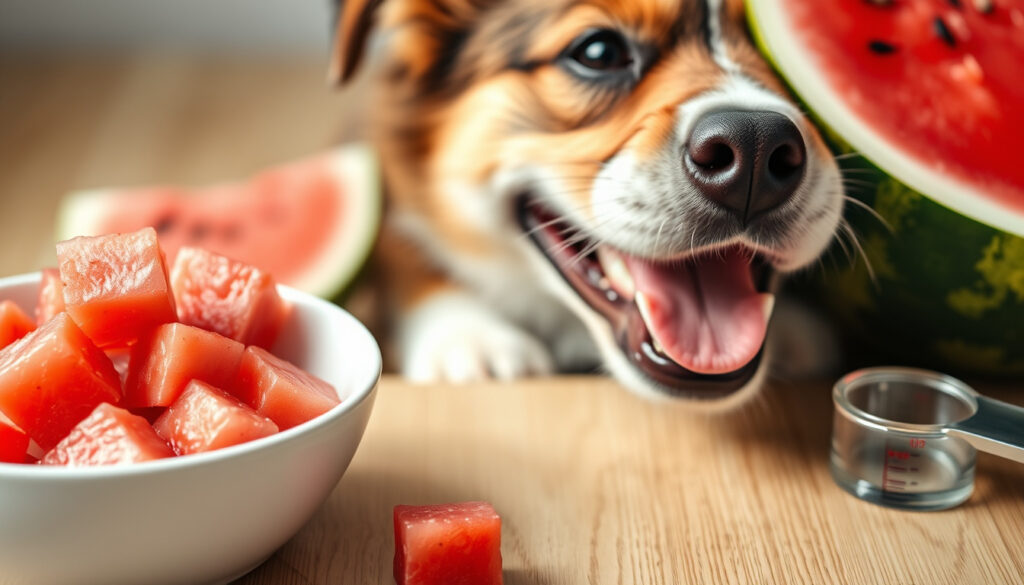
Can Dogs Have Watermelon? Safety, Portion Tips & Risks
Summer days and watermelon go hand in hand, and it’s natural to wonder if your dog can share the sweet, juicy treat. The short answer is yes — but only if you take a few simple precautions.
Water content of watermelon: 92% ·
Safe serving size per 10 lbs body weight: 1–2 tablespoons ·
Calories per 100g of watermelon: 30 kcal ·
Percentage of daily treats limit: 10% of daily calories ·
Common sign of overfeeding: Diarrhea
Quick snapshot
- Hydrating (92% water) (ZIWI Pets, pet nutrition brand)
- Low in calories (30 kcal per 100g) (American Kennel Club, canine nutrition experts)
- Contains vitamins A and C (Purina US, pet food manufacturer)
- Whether watermelon seeds always cause intestinal blockage — risk depends on dog size and number of seeds swallowed (Hill’s Pet Nutrition, veterinary nutrition brand)
- Watch for gastrointestinal upset or diarrhea within the first 24 hours after feeding watermelon, especially if your dog ate seeds or rind (Purina US, pet food manufacturer)
- Contact your veterinarian if your dog shows signs of digestive distress after eating watermelon (Purina US, pet food manufacturer)
A few key numbers every dog owner should remember.
| Fact | Value |
|---|---|
| Water content | 92% |
| Safe serving per 10 lbs | 1–2 tablespoons |
| Calories (100g) | 30 kcal |
| Treat limit | 10% of daily calories |
Can Dogs Eat Watermelon?
Can dogs have watermelon seeds?
- Watermelon seeds are not safe — they can cause intestinal blockage and pose a choking hazard (Hill’s Pet Nutrition, veterinary nutrition brand).
The American Kennel Club (canine nutrition experts) confirms that only seedless watermelon or watermelon with all seeds removed should be offered. A seed or two is unlikely to cause health problems for large dogs, but for small dogs many seeds can be dangerous.
Small breeds face the greatest risk from seeds — a single seed can be a choking hazard, and several can accumulate in the intestine.
Can dogs have watermelon juice?
- Watermelon juice from fresh fruit (no added sugar or sweeteners) is safe in small amounts (Purina US, pet food manufacturer).
Avoid watermelon-flavored drinks or candies — they may contain additives or artificial sweeteners like xylitol, which is toxic to dogs. Stick to the fresh, natural juice squeezed from the flesh.
Can dogs eat watermelon yellow?
- Yes, yellow watermelon is equally safe as red watermelon for dogs, provided seeds and rind are removed (American Kennel Club, canine nutrition experts).
The difference in color comes from different antioxidants — both varieties are low in calories and high in water content. The same preparation rules apply. The implication: watermelon is safe, but the seeds and rind are not. Preparation is everything.
How much watermelon can I give my dog?
What is a safe serving size for small dogs?
- A practical serving is a few bite-sized pieces, adjusted to the dog’s size, age, and activity level (AKC, canine nutrition experts).
As a rule of thumb, offer 1–2 tablespoons of cubed flesh per 10 pounds of body weight. For a toy breed like a Chihuahua, start with a single teaspoon-sized cube. For a large breed like a Labrador, a handful of small cubes is fine.
How often can dogs eat watermelon?
- Treats should not exceed 10% of a dog’s daily calories (AKC, canine nutrition experts).
Watermelon should be an occasional treat, not a daily staple. Even low-sugar fruits can contribute to weight gain if fed too often. Dogs with diabetes should avoid watermelon because of its natural sugar content (Purina US, pet food manufacturer).
A diabetic dog’s blood sugar can spike after a portion of watermelon — the same portion that is perfectly safe for a healthy dog.
The trade-off: watermelon offers hydration and vitamins, but too much can upset the diet balance. Moderation is key.
What happens if my dog eats a watermelon?
What if my dog eats watermelon seeds?
- Swallowing seeds may cause intestinal blockage, especially in small dogs or if many seeds are eaten (Hill’s Pet Nutrition, veterinary nutrition brand).
Dogs that eat a few seeds typically pass them without issues. However, a large number of seeds can form a clump that blocks the intestines, requiring veterinary intervention. Monitor your dog for signs of distress.
What if my dog eats watermelon rind?
- Watermelon rind is tough to digest and can cause gastrointestinal upset, vomiting, or even obstruction (Purina US, pet food manufacturer).
The rind is fibrous and can be a choking hazard. Some dogs may chew on it without swallowing, but if ingested, symptoms usually appear within 24 hours. Contact your vet if you see persistent vomiting or if your dog stops eating. The pattern: seeds and rind are the two real dangers. Everything else is about portion control.
What are signs of watermelon poisoning in dogs?
What are symptoms of intestinal blockage?
- Vomiting, loss of appetite, constipation, and abdominal pain are common signs (Hill’s Pet Nutrition, veterinary nutrition brand).
Blockage from seeds or rind requires immediate veterinary care. Do not induce vomiting without professional guidance.
What are signs of digestive upset?
- Diarrhea, bloating, and flatulence after eating too much watermelon (Hill’s Pet Nutrition, veterinary nutrition brand).
Most cases of mild digestive upset resolve within 24 hours if you withhold treats and return to the dog’s regular diet. If diarrhea persists for more than a day, consult a vet. The catch: diarrhea is the most common sign of overfeeding, and it’s easily preventable with proper portions.
Are any fruits toxic to dogs?
Which fruits are toxic?
- Grapes and raisins are highly toxic and can cause kidney failure (AKC, canine nutrition experts).
- Cherries (with pits) and citrus peels also pose risks.
Watermelon is safe, but it’s vital to know which fruits to keep away completely.
Which fruits are safe?
- Apples (without seeds), blueberries, bananas, strawberries, and watermelon are considered safe (Purina US, pet food manufacturer).
Always remove pits, seeds, and any tough skins before serving. The same 10% treat rule applies to all fruits. The implication: watermelon belongs to the safe list, but knowing the toxic fruits can prevent a life-threatening emergency.
Which Fruits Are Safe for Your Dog to Eat?
What about bananas?
- Bananas are safe in small amounts — they’re rich in potassium but also high in sugar (Purina US, pet food manufacturer).
A few slices are fine, but a whole banana is too much for most dogs. For detailed potassium comparisons, see our article on How Much Potassium in a Banana – Mg, mEq and Comparisons.
What about strawberries?
- Strawberries are safe when fresh, hulled, and cut into small pieces (AKC, canine nutrition experts).
Like watermelon, strawberries are hydrating and contain vitamin C. Avoid canned or syrup-packed strawberries.
What about watermelon?
- Watermelon flesh is safe, but the seeds and rind are not (ZIWI Pets, pet nutrition brand).
We’ve covered the details — it’s a hydrating, low-calorie treat when prepared correctly. The pattern: most common fruits are safe as long as you remove the parts that can cause harm. For another dog-safe food guide, check out Can Dogs Eat Sweetcorn? Safety, Benefits & Risks (Vet Approved).
Upsides
- Hydrating — 92% water content helps dogs stay cool.
- Low in calories — only 30 kcal per 100g.
- Provides vitamins A and C for immune health.
- Can be frozen for a crunchy summer treat.
Downsides
- Seeds can cause intestinal blockage or choking.
- Rind is tough to digest and may cause obstruction.
- Too much can lead to diarrhea or stomach upset.
- Natural sugar content may be unsuitable for diabetic dogs.
How to Safely Serve Watermelon to Your Dog
- Choose a fresh watermelon — preferably seedless, or remove all seeds manually.
- Cut off the green rind completely — only the red or yellow flesh should remain.
- Cut the flesh into small, bite-sized cubes (about 1 inch for large dogs, smaller for small breeds).
- Serve a few cubes at a time — start with the portion guideline (1–2 tbsp per 10 lbs).
- Monitor your dog for any signs of digestive upset in the following hours.
The pattern: preparation is the same for all dogs — remove everything that isn’t soft flesh. Freeze cubes for a refreshing treat on hot days.
What We Know and What’s Unclear
Confirmed facts
- Dogs can eat watermelon flesh without seeds and rind (American Kennel Club, canine nutrition experts).
- Too much can cause diarrhea (Hill’s Pet Nutrition, veterinary nutrition brand).
What’s unclear
- Whether seeds always cause blockage — depends on dog size and quantity (Hill’s Pet Nutrition, veterinary nutrition brand).
- Whether watermelon’s high water content (92%) is always beneficial for hydration — some sources note it is hydrating (ZIWI Pets, pet nutrition brand), but evidence is moderate and more research is needed.
“Yes, dogs can eat watermelon, but only when prepared properly.”
— American Kennel Club (canine nutrition experts)
“Remove seeds and rind before serving.”
— PetMD veterinarian, cited by Hill’s Pet Nutrition (veterinary nutrition brand)
Watermelon can be a safe, hydrating treat for dogs if you stick to the flesh and skip the extras. For the majority of healthy dogs, a few cubes now and then pose no problem. But for owners of diabetic dogs or small puppies, the stakes are higher: a portion of watermelon that seems harmless could cause a sugar spike or a choking incident. The choice is clear: prepare carefully, serve sparingly, and always watch for signs of trouble.
For a more detailed breakdown of portion sizes and seed removal, check out this guide on safely feeding watermelon to dogs from a UK-based pet resource.
Frequently Asked Questions
Can dogs eat watermelon skin?
No, the skin (rind) is tough to digest and can cause gastrointestinal upset or blockage. Always remove it before serving. (Purina US)
Is watermelon good for dogs with kidney disease?
Watermelon is low in protein but moderate in potassium. Dogs with kidney disease should only have watermelon after consulting a veterinarian, as potassium levels may need to be restricted. (AKC)
How to freeze watermelon for dogs?
Cut the flesh into small cubes, place them on a baking sheet lined with parchment paper, and freeze until solid. You can also blend the flesh with a little plain unsweetened yogurt (if your dog tolerates dairy) and freeze in ice cube trays. (AKC)
Can dogs eat watermelon seeds if swallowed?
A few seeds are unlikely to cause problems for large dogs, but many seeds can lead to intestinal blockage. Watch for vomiting or loss of appetite and contact your vet if symptoms appear. (Hill’s Pet Nutrition)
What is the difference between red and yellow watermelon for dogs?
Both colors are safe and nutritionally similar. Yellow watermelon has slightly different antioxidants but is still low in calories and high in water. The same preparation rules apply. (AKC)
Can dogs eat watermelon every day?
Not recommended. Even though watermelon is low in calories, feeding it daily can upset the nutritional balance and cause digestive issues. Treats should be occasional. (Hill’s Pet Nutrition)
Does watermelon cause bloat in dogs?
Bloat from watermelon alone is unlikely, but overeating any high-fiber food can cause gas and bloating. Stick to small portions to avoid discomfort. (Purina US)
More related posts
 Nell Fisher: Age, Height & Role in Stranger Things
 Matt Goss in 2025: Relationship, Net Worth, and Life After Bros
 Crystal Palace vs Brighton: TV Channel, Kickoff & Rivalry
 How Many Points to Win the Ryder Cup: 14.5 Explained
 Jurnee Smollett Biography: Family, Divorce, Career Highlights
 What Is Net Zero? Meaning, Examples and 2050 Goals
 Sort Your Life Out – BBC Schedule, Cast and Applications
 Choi Hyun-Wook: Age, Incident, Dramas, and Personal Life