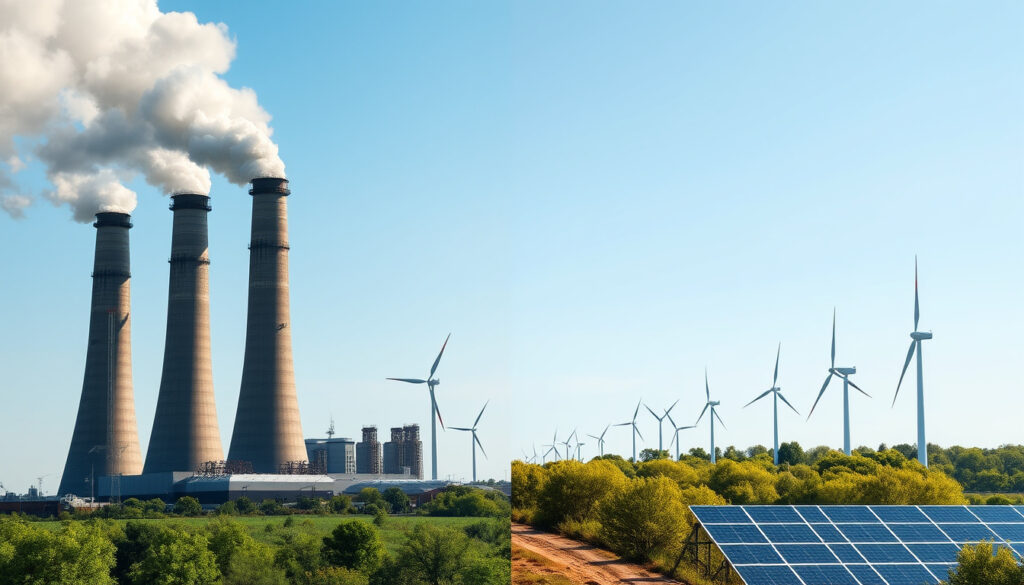
What Is Net Zero? Meaning, Examples and 2050 Goals
If you’ve heard “net zero” mentioned on the news, in corporate press releases, or at climate conferences, you’ve probably wondered what it actually means in practice. The phrase shows up everywhere, yet the specifics—the exact definition, which countries are committed, and what happens if we actually hit the 2050 target—tend to stay fuzzy. This article cuts through the jargon to explain what net zero really means, why it matters for the planet, and who’s actually closest to achieving it.
Core Definition: Balance between greenhouse gas emissions produced and those removed from the atmosphere · Global Target Year: 2050 · Key Absorber: Natural sinks like forests and soils · UN Coalition Members: Over 100 entities committed · UK Commitment: Net zero by 2050
Quick snapshot
- Net zero means cutting carbon emissions to a small amount of residual emissions absorbed by nature (United Nations)
- Balance between gases going into and out of the atmosphere (Oxford Net Zero)
- Global emissions need to be reduced by 45% by 2030 and reach net zero by 2050 to keep warming to 1.5°C (United Nations)
- Net zero by 2050 requires transforming energy production, transport, and consumption (US Department of Energy / IEA)
- Global emissions continue to rise despite growing net-zero pledges (US Department of Energy)
- Which single country is definitively closest to achieving net zero
- Whether the 2050 target is fully achievable given current implementation gaps
- Only 15% of net zero targets are now enshrined in law, covering 75% of global GHG emissions (Oxford Net Zero)
- Current national plans would decrease emissions by about 12% by 2035—far short of the required 55% reduction (United Nations)
- Global emissions continue to rise despite growing net-zero pledges (US Department of Energy)
- Net zero by 2050 requires transforming energy production, transport, and consumption (IEA Net Zero Roadmap)
| Attribute | Value |
|---|---|
| Achieved When | Emissions equal removals |
| Primary Gases | CO₂, methane, others |
| UN Definition | Residual emissions absorbed by nature |
| Common Target | 2050 globally |
| 2030 Milestone | 45% below 2010 levels for 1.5°C |
| Current Warming | 1.2°C above pre-industrial |
What does net zero mean in simple terms?
At its core, net zero refers to a state where the greenhouse gases emitted into the atmosphere are balanced by an equivalent amount removed or offset through natural processes, technological solutions, or both. The United Nations describes it as cutting carbon emissions to a small amount of residual emissions that can be absorbed and durably stored by nature.
Net zero differs from “carbon neutral” in a crucial way: it requires cutting emissions by 90–95% before any offsets are applied, rather than relying on offsets alone. Companies claiming “carbon neutral” without deep cuts aren’t meeting true net-zero standards (Net0).
Core balance of emissions and removals
The math is straightforward in concept. If an oil refinery pumps out 1,000 tonnes of CO₂ annually, achieving net zero means either slashing those emissions dramatically, removing an equivalent amount from the atmosphere, or—ideally—doing both. Natural absorbers like forests, wetlands, and soils handle a large share of removal, while emerging carbon capture technologies are designed to handle the rest.
Role of residual emissions
Even the most aggressive decarbonization scenarios don’t eliminate every last tonne of emissions. Aviation, certain industrial processes, and agriculture remain difficult to fully decarbonize. These residual emissions must be permanently removed from the atmosphere—making them a critical component of any genuine net-zero plan (Oxford Net Zero).
According to the IEA Net Zero Roadmap, meeting the 2050 target requires a complete transformation of how energy is produced, transported, and consumed worldwide.
What net zero means and why it matters
The planet is currently about 1.2°C warmer than it was during the late 1800s, before industrial-scale fossil fuel use began. Without decisive action, scientists project that warming could exceed 1.5°C this decade—a threshold the Paris Agreement identifies as the line beyond which extreme weather events, sea-level rise, and ecosystem collapse become far more likely and severe.
Importance for climate change
Limiting warming to 1.5°C requires halving global emissions by 2030 and reaching net-zero emissions soon after mid-century. The Climate Action Tracker notes that every pathway compatible with 1.5°C involves achieving net-zero greenhouse gases in the second half of the century. Without net zero, that target becomes mathematically unreachable.
Global implications
The stakes are planetary. The United States Long-Term Strategy submitted to the UNFCCC states plainly: “Achieving net-zero emissions is how we—and our fellow nations around the globe—will keep a 1.5°C limit on global temperature rise within reach.” Current national climate plans, however, would decrease global emissions by only about 12% by 2035—far short of the required 55% reduction that the United Nations says is necessary.
What are examples of net zero?
Corporate and national net-zero commitments offer concrete illustrations of what the target looks like in practice—and where the gap between pledge and reality remains wide.
Corporate examples like Microsoft
Microsoft has publicly committed to balancing all carbon emissions it produces, including indirect “Scope 3” emissions from its supply chain and customer use of its products. The company’s approach combines aggressive internal reductions with carbon removal purchases, though critics note that genuine net-zero requires 90–95% direct cuts rather than heavy reliance on offsets (Net0).
Country-level efforts
At the national level, the Climate Council reports that Australia legislated net zero by 2050 in 2022, alongside a 43% reduction below 2005 levels by 2030—later strengthened by a 2025 announcement targeting 62–70% reduction by 2035. The Energy and Climate Intelligence Unit notes that Scotland targets net-zero by 2045, five years ahead of the UK-wide 2050 deadline.
As of 2024, only 11% of large enterprises were reducing emissions in line with net-zero ambition, according to analysis cited by Net0. The pledge landscape looks promising; the track record does not.
What is net zero in the UK?
The United Kingdom became the first G7 nation to embed net zero in law. The Energy and Climate Intelligence Unit confirms that the UK amended its Climate Change Act 2008 on June 27, 2019, to commit to net-zero greenhouse gas emissions by 2050—a legally binding target that contrasts with the purely voluntary pledges of most other nations at that time.
UK policy and timeline
Scotland and Wales have their own differentiated targets within the UK framework. Scotland aims for net-zero by 2045, while Wales targets a 95% reduction by 2050. These sub-national ambitions sit under the overarching UK law, creating a layered approach to domestic climate action.
Progress tracking
The Oxford Net Zero initiative tracks global progress and notes that 15% of net zero targets are now enshrined in law—up from less than 5% in 2020—covering 75% of global greenhouse gas emissions as of 2026. The UK has been among the front-runners in translating commitment into legislation, though whether current policies are sufficient to meet the target remains a matter of active debate.
Watch for the gap between announced targets and actual policy implementation. With 137 national governments having set net-zero targets as of 2026 and only 15% backed by law, the credibility of many pledges remains untested.
The implication: the UK’s legally binding framework makes it more accountable than nations relying on voluntary pledges, but even front-runners face questions about whether current policies will deliver on their 2050 commitments.
Which country is closest to net zero?
No single nation has yet achieved net-zero status. The Net0 analysis suggests that several Nordic countries and small island nations with high renewable energy penetration are among the closest, though “closest” depends heavily on how emissions are measured and which sectors are counted. The Net0 analysis suggests that several Nordic countries and small island nations with high renewable energy penetration are among the closest to achieving net zero, though “closest” depends heavily on how emissions are measured and which sectors are counted, and you can learn more about what net zero entails at $нормальна температура тіла.
Top countries in race
Developed nations generally have earlier target dates. The Energy and Climate Intelligence Unit notes that while countries like the UK and Denmark have legislated targets, developing nations typically face longer timelines—often the 2050s or 2060s. This creates an uneven global landscape where the heaviest historical emitters are being asked to move fastest.
Challenges ahead
The IEA Net Zero Roadmap makes clear that achieving the target involves no offsets outside the energy sector. Every pathway requires massive deployment of clean energy, electrification of transport and heating, and industrial process changes at a scale never attempted before. As of 2026, global emissions continue to rise despite growing pledges—a gap that current trajectories show no sign of closing.
“To keep global warming to no more than 1.5°C – as called for in the Paris Agreement – emissions need to be reduced by 45% by 2030 and reach net zero by 2050.”
— United Nations Net Zero Coalition
“Achieving net-zero emissions is how we—and our fellow nations around the globe—will keep a 1.5°C limit on global temperature rise within reach.”
— United States Long-Term Strategy (submitted to UNFCCC)
Related reading: What is low blood pressure · What is body dysmorphia
UK efforts towards net zero by 2050 prominently feature the UK ZEV mandate guide, which sets binding targets for 80% zero-emission new cars by 2030.
Frequently asked questions
What is net zero used for?
Net zero is used as a framework for climate policy at corporate and national levels. It provides a measurable endpoint for emissions reduction strategies, allowing organizations and governments to set targets, track progress, and report against a common metric aligned with the Paris Agreement goal of limiting warming to 1.5°C.
What is net zero in climate change?
In the context of climate change, net zero refers to the point at which human-caused greenhouse gas emissions are balanced by removal from the atmosphere. Achieving net zero globally is considered essential to stabilizing the climate system and preventing the most catastrophic warming scenarios.
Is net zero possible?
Technically, net zero is achievable. The IEA Net Zero Roadmap demonstrates a technically feasible pathway for the global energy sector to reach net-zero emissions by 2050. Whether current political will and implementation speed are sufficient is a separate—and more uncertain—question.
What is a net zero target?
A net zero target is a commitment to balance all greenhouse gas emissions produced with an equivalent amount removed from the atmosphere by a specific date. The most common global target year is 2050, though some countries and companies set earlier dates. Legally binding targets carry more weight than voluntary pledges.
What is net zero policy?
Net zero policy encompasses the laws, regulations, incentives, and international agreements designed to drive emissions reductions and carbon removal. This includes carbon pricing mechanisms, renewable energy mandates, efficiency standards, and the phase-out of fossil fuel infrastructure.
Can net zero emissions be achieved by 2050?
The scientific consensus from the IPCC and IEA says 2050 is achievable, but only with immediate and dramatic acceleration of clean energy deployment, electrification, and industrial transformation. Current policy trajectories fall well short of what’s needed, making the 2050 target ambitious rather than certain.
What’s the difference between net zero and carbon neutral?
Net zero requires deep emissions cuts (90–95% reduction) before any offsets or removals are applied. Carbon neutral allows organizations to offset their emissions without making such cuts—essentially paying others to reduce emissions rather than changing their own operations. Net zero is the more rigorous standard aligned with 1.5°C pathways.
How many companies have net zero targets?
Approximately 10,000 companies had validated net-zero targets through the Science Based Targets initiative (SBTi) as of 2026, according to industry tracking. However, only 11% of large enterprises were actively reducing emissions in line with those ambitions, highlighting the gap between commitment and implementation.
For governments watching international peers, the choice is increasingly binary: enact policies that close the gap between pledges and actual emissions reductions, or face mounting pressure from investors, courts, and citizens demanding accountability. The 2050 deadline is not abstract—it is approximately 25 years away, and the infrastructure decisions made in the next five to ten years will largely determine whether it is met.
More related posts
 Severus Snape: The Tragic Hero of Harry Potter Explained
 When Is Grand National 2025 – Date, Time, Winner and Schedule
 Klay Thompson 2025: Net Worth, Rumors & Career Update
 David Blaine: Net Worth, Stunts, and Current Life in 2025
 Michelle Monaghan: Biography, Career, Family & Skin Care
 20 USD to GBP: Convert 20 US Dollars to British Pounds
 Ned Porteous: EastEnders and Emmerdale Career Overview
 Anne Hathaway Shakespeare: The Life of the Bard’s Wife