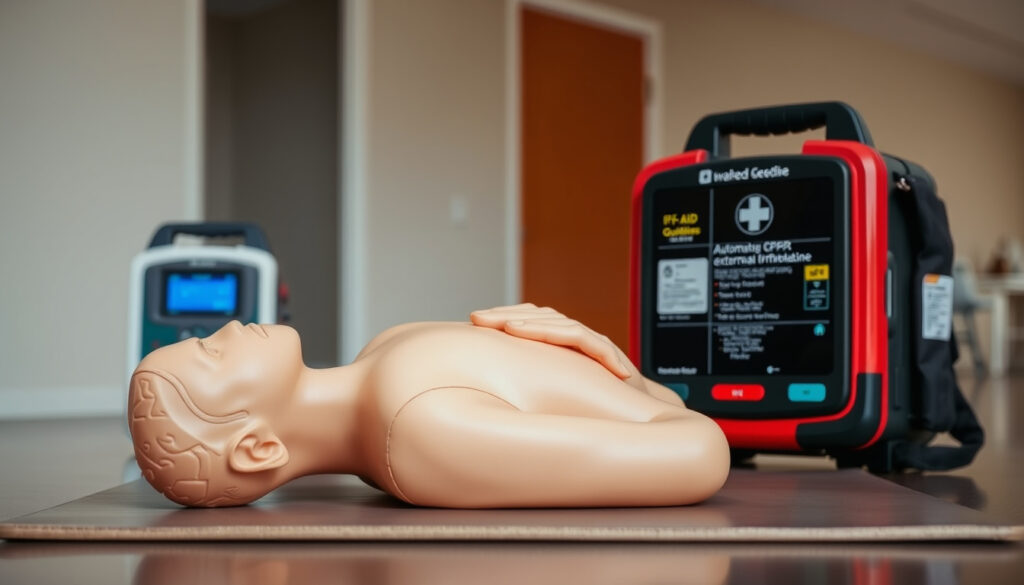
What Does CPR Stand For? Definition, Steps & Modern Guidelines
If you’ve ever watched a medical drama, you’ve seen someone pump a patient’s chest and deliver rescue breaths—often followed by a defibrillator jolt. But the real story of CPR is more nuanced than Hollywood suggests. Here’s what the acronym stands for, how the technique has evolved, and why the latest guidelines emphasize simple, powerful chest compressions over mouth-to-mouth for untrained bystanders.
Impact of immediate CPR on survival: Can double or triple survival chances · Recommended compression rate: 100–120 compressions per minute · Compression depth for adults: At least 2 inches (5 cm) · Time window for effective CPR: Within 4–6 minutes before brain damage begins · Bystander CPR rate in the US: Approximately 40% of out-of-hospital cardiac arrests · Survival rate with no CPR: Decreases by 7–10% per minute without intervention
Quick snapshot
- CPR stands for cardiopulmonary resuscitation (MedlinePlus)
- Immediate CPR can double or triple survival chances after cardiac arrest (American Heart Association)
- Chest compressions should be at least 2 inches deep at 100–120 per minute (American Heart Association)
- Optimal compression depth for children and infants (varies by size) (Cleveland Clinic)
- Whether rescue breaths add significant benefit in adult out-of-hospital arrest (Cleveland Clinic)
- Long-term neurological outcome differences between hands-only and conventional CPR (Cleveland Clinic)
- Modern CPR developed in 1960 by Dr. Peter Safar and Dr. James Elam (NCBI StatPearls)
- 2008: AHA endorses hands-only CPR for untrained bystanders (American Heart Association)
- 2010: Sequence changed from A-B-C to C-A-B to prioritize compressions (American Heart Association)
- Guidelines updated every 5 years via ILCOR review (AHA Journals)
- Growing emphasis on high-quality compressions and minimizing interruptions (AHA Journals)
- Community CPR training focusing on hands-only technique (AHA Journals)
Six key figures capture the essentials of CPR, one pattern: each number defines a life-or-death standard.
| Label | Value |
|---|---|
| Full name | Cardiopulmonary resuscitation (MedlinePlus) |
| Year of modern CPR development | 1960 (NCBI StatPearls) |
| Compression rate | 100–120 per minute (American Heart Association) |
| Compression depth (adult) | At least 2 inches (Mayo Clinic) |
| Survival increase with immediate CPR | 2× to 3× higher (American Heart Association) |
| Hands-only CPR recommended for | Untrained bystanders (Cleveland Clinic) |
What does CPR stand for?
CPR is the acronym for cardiopulmonary resuscitation. “Cardio” refers to the heart, “pulmonary” to the lungs, and “resuscitation” to reviving someone from apparent death (CPRAEDCourse). The Cleveland Clinic defines it as a life-saving technique that combines chest compressions and rescue breaths to keep blood flowing to vital organs until professional help arrives.
The implication: clear terminology removes confusion when every second matters.
CPR is the only intervention that buys time during cardiac arrest. Without it, survival decreases 7–10% every minute. Immediate bystander action can double or even triple the odds of walking out of the hospital.
The procedure is indicated when a person is unresponsive, not breathing normally, and has no pulse (NCBI StatPearls). The American Heart Association stresses that the adult Chain of Survival begins with recognition and a call to 911, followed by early CPR with an emphasis on chest compressions.
What are the 7 steps of CPR?
The American Red Cross outlines seven sequential steps for conventional CPR when a trained rescuer is present (American Red Cross). A tight rhythm, a correct depth, and minimal pauses are critical.
- Step 1: Check the scene for safety.
- Step 2: Check the person for responsiveness and normal breathing.
- Step 3: Call 911 and get an AED if available.
- Step 4: Begin chest compressions—push hard and fast at 100–120 per minute, at least 2 inches deep (American Heart Association).
- Step 5: Open the airway using the head-tilt, chin-lift maneuver.
- Step 6: Give two rescue breaths (for trained rescuers).
- Step 7: Use an AED as soon as it arrives—turn it on and follow voice prompts.
When to perform CPR?
Start CPR if the person is unresponsive and not breathing normally (Mayo Clinic). If you’re unsure, err on the side of action—doing something is far better than doing nothing.
What is the correct CPR ratio for adults?
For a single rescuer, the recommended ratio is 30 compressions to 2 breaths (American Heart Association). For two trained rescuers performing with an advanced airway, compressions continue at a steady rate without pausing for breaths.
What are the types of CPR?
There are two common types: conventional CPR (compressions plus rescue breaths) and hands-only CPR (compressions alone). The Cleveland Clinic recommends hands-only CPR for untrained bystanders because it removes the hesitation around mouth-to-mouth contact and is equally effective in the first few minutes of adult cardiac arrest.
The pattern: simpler technique drives higher bystander action rates.
Why did CPR change from A-B-C to C-A-B?
In 2010, the American Heart Association shifted the sequence from Airway-Breathing-Compressions (A-B-C) to Compressions-Airway-Breathing (C-A-B) (American Heart Association). The reason: every second counts. Starting with compressions gets blood flowing to the brain and heart immediately, rather than delaying for airway maneuvers.
What is the C-A-B sequence?
The C-A-B sequence means: first, deliver 30 chest compressions; then open the airway; then give two rescue breaths. This prioritization reduces the time to first compression and improves survival outcomes in adult out-of-hospital cardiac arrest (NCBI StatPearls).
The catch: blood flow—not air—is the most urgent need when the heart stops.
The swap was a simple recognition that blood flow—not air—is the most urgent need when the heart stops. Compressions first, airway second, breathing third.
Why are rescue breaths no longer recommended?
Rescue breaths are still recommended for trained rescuers, infants, children, and victims of drowning or drug overdose (American Red Cross). But for the average adult with sudden cardiac arrest, hands-only CPR (compressions only) is now the standard for untrained bystanders.
What is hands-only CPR?
Hands-only CPR involves continuous chest compressions at 100–120 per minute without stopping for breaths. The Cleveland Clinic notes that during sudden cardiac arrest, the blood still contains enough oxygen for the first few minutes—compressions keep that oxygen circulating.
Should you do mouth-to-mouth?
If you are untrained or unwilling to give rescue breaths, skip them. The American Heart Association explicitly endorses hands-only CPR for bystanders. In the time it takes to position the head and give two breaths, you could have delivered 20–30 more compressions—a trade-off that tilts decisively toward compression-only in most adult cases.
The pattern: each revision reduces complexity for bystanders and increases focus on the one action that matters most—chest compressions.
Should you remove a bra when using a defibrillator?
Yes—remove the bra before placing AED pads. The American Heart Association states that AED pads must adhere to bare, dry skin. Underwire bras and thick fabric can prevent proper adhesion and reduce shock effectiveness.
What is the 3 bra rule?
The “3 bra rule” is a simple memory aid: remove the bra when using an AED; keep it on during chest compressions alone. The logic: compression effectiveness is not hindered by fabric, but defibrillation requires direct skin contact (GoodRx).
Do you need to remove a bra for CPR?
No. Chest compressions can be performed through a bra. The priority is speed—don’t waste time removing clothing unless you’re about to use a defibrillator.
The catch: modesty often causes hesitation, but when an AED is involved, removing a bra is a medical necessity, not an optional step.
Modesty often causes hesitation. But when an AED is involved, removing a bra is a medical necessity, not an optional step. A delay of even a few seconds reduces the chance of a successful shock.
What if the person vomits during CPR?
Vomiting is common during CPR due to gastric inflation from rescue breaths or the body’s response to chest compressions. The American Red Cross advises rolling the person onto their side, clearing the airway, and then resuming compressions immediately.
How to handle vomiting during CPR
- Stop compressions briefly and roll the person onto their side.
- Use a gloved hand or cloth to sweep out the mouth and clear the airway.
- Return the person to their back and restart chest compressions without delay (GoodRx).
The American Heart Association reminds rescuers to keep interruptions under 10 seconds to maintain blood flow.
The implication: brief pauses are acceptable, but every second off the chest reduces survival odds.
The Evolution of CPR: Key Milestones
CPR’s journey from experimental technique to global emergency standard is marked by several key dates.
- 1960: Modern CPR developed by Dr. Peter Safar and Dr. James Elam (NCBI StatPearls).
- 2008: AHA endorses hands-only CPR for untrained bystanders (American Heart Association).
- 2010: Sequence changes from A-B-C to C-A-B (American Heart Association).
- 2015: Updated guidelines emphasize high-quality compressions with minimal interruptions (AHA Journals).
- 2020: COVID-19 pandemic leads to temporary emphasis on hands-only CPR to reduce infection risk (AHA Journals).
The pattern: each revision reduces complexity for bystanders and increases focus on the one action that matters most—chest compressions.
What’s Confirmed and What’s Unclear
Confirmed facts
- CPR stands for cardiopulmonary resuscitation (MedlinePlus).
- Chest compressions at least 2 inches deep, 100–120 per minute (Mayo Clinic).
- Hands-only CPR is effective for out-of-hospital cardiac arrest in adults (Cleveland Clinic).
- AED pads must be placed on bare skin (bra removed if needed) (GoodRx).
- Survival rate doubles or triples with immediate bystander CPR (American Heart Association).
Common myths and rumors
- “You must give mouth-to-mouth” – Not for untrained bystanders; hands-only is recommended.
- “You can hurt someone, so it’s better to wait for professionals” – Doing nothing is far worse; rib fractures are a possible but acceptable risk.
- “CPR only works in hospitals” – Bystander CPR in the community dramatically increases survival.
- “You need to remove all clothing for compressions” – Only remove clothing for AED pad placement.
- “AEDs are too complicated for untrained people” – AEDs give clear voice prompts; anyone can use them.
Expert Perspectives on CPR
CPR is an emergency treatment when someone’s breathing or heartbeat has stopped.
— Mayo Clinic (health publisher)
The AHA changed the sequence from A-B-C to C-A-B to get blood circulating faster.
— American Heart Association, via CPR Boston (training affiliate)
Hands-only CPR can be performed by untrained bystanders and is just as effective in the first few minutes.
— American Red Cross (emergency training organization)
CPR is a life-saving technique that combines chest compressions and rescue breaths to keep blood flowing to vital organs.
— Cleveland Clinic (medical institution)
The consensus: immediate, high-quality chest compressions are the single most effective action a bystander can take.
For those looking to apply these skills, CPR first aid training is available through accredited providers across Victoria.
Frequently asked questions
Can you perform CPR on someone with a pacemaker?
Yes. The AED will still analyze the rhythm and deliver a shock if needed. Place pads at least one inch away from the pacemaker device if visible.
Do you need to remove clothing for CPR?
Only for AED pad placement. For chest compressions alone, you can compress through thin clothing. The priority is speed.
How long can you perform CPR effectively?
Rescuers often tire after 2 minutes. If possible, switch with another rescuer every 2 minutes to maintain compression quality (American Heart Association).
Can you survive with only chest compressions?
In many adult cardiac arrests, yes. Hands-only CPR circulates oxygen already in the blood and is as effective as conventional CPR in the first few minutes.
What is the survival rate of CPR?
Immediate bystander CPR raises survival to 2–3 times higher than without it (American Heart Association). Actual survival rates vary widely based on response time and underlying health.
Does CPR break ribs?
Yes, it’s common. Rib fractures are an acceptable risk—without CPR, the person will not survive. Proper hand position reduces the chance of fracture.
What is the recovery position after CPR?
If the person regains a pulse and starts breathing, roll them onto their side in the recovery position to keep their airway open and allow fluids to drain. Continue to monitor until help arrives (American Red Cross).
More related posts
 Give Me Cosmetics Discount Code – Student, NHS & First Order Deals
 What Is the Hear Me Out Cake? TikTok Trend & How to Do It
 Jennifer Love Hewitt: Age, Husband, Kids, Movies & TV Shows
 Max Thieriot: Why He Left SEAL Team, Wife, Net Worth & More
 Nick Grimshaw: From Radio 1 to 6 Music, Sobriety & Harry Styles
 Alexia Putellas: Biography, Stats, Achievements, and News (2026)
 Wayne Thiebaud: Life, Art, and Famous Paintings
 Alison King 2025: Partner, Coronation Street Exit & Net Worth